Professional butchers - and anyone breaking down whole cuts at a serious volume - need a chopping board for professional butchers that survives daily cleaver work, holds an edge on your knives, and takes a scrub-down dozens of times a week without splitting. Most kitchen boards fold under that kind of use inside a year; a handful of solid hardwood blocks are actually built for it.
- The best chopping board for professional butchers in 2026 is a thick end grain block, not a flat edge-grain slab that scars with every cut.
- Saw Swag's Moat & Grain Turlough Premium Butcher Block mixes walnut, cherry, maple and beech at 170 euro - Buy for daily primal breakdown.
- Skip thin edge-grain boards and stainless steel prep surfaces for bone-in cutting - one warps, the other blunts your knives faster.
- Food-safe mineral oil and board butter, applied weekly under heavy use, keep a wooden butcher block from drying out and cracking.
- Denser hardwoods like beech and maple outlast softer species when a cleaver is involved every day.
Why this matters
A thin board looks fine in a photo and fails within months of real butchery work. Wood that's too soft picks up deep cleaver grooves that trap moisture and bacteria, and a board that isn't sealed with food-safe oil dries out, cups, and cracks along the grain.
The difference between a board that lasts one season and one that lasts a decade comes down to three things: how the wood is cut (end grain vs edge grain), how dense the species is, and how consistently it gets oiled. Get those right and a solid hardwood board in 2026 outperforms most of what's marketed as commercial-grade.
Who this is for
This guide is for independent butchers, farm shop counters, market stall vendors, and home-based meat processors who break down whole or half carcasses, primal cuts, or high volumes of poultry and game on a regular basis - not for certified industrial processing lines that need audited stainless steel surfaces. If you're running a HACCP-audited facility, a wooden board isn't the fix regardless of how it's made. If you're a small operation cutting daily and washing your board by hand, Saw Swag makes boards built for exactly that.
What to look for in a chopping board for professional butchers
End grain construction over edge grain
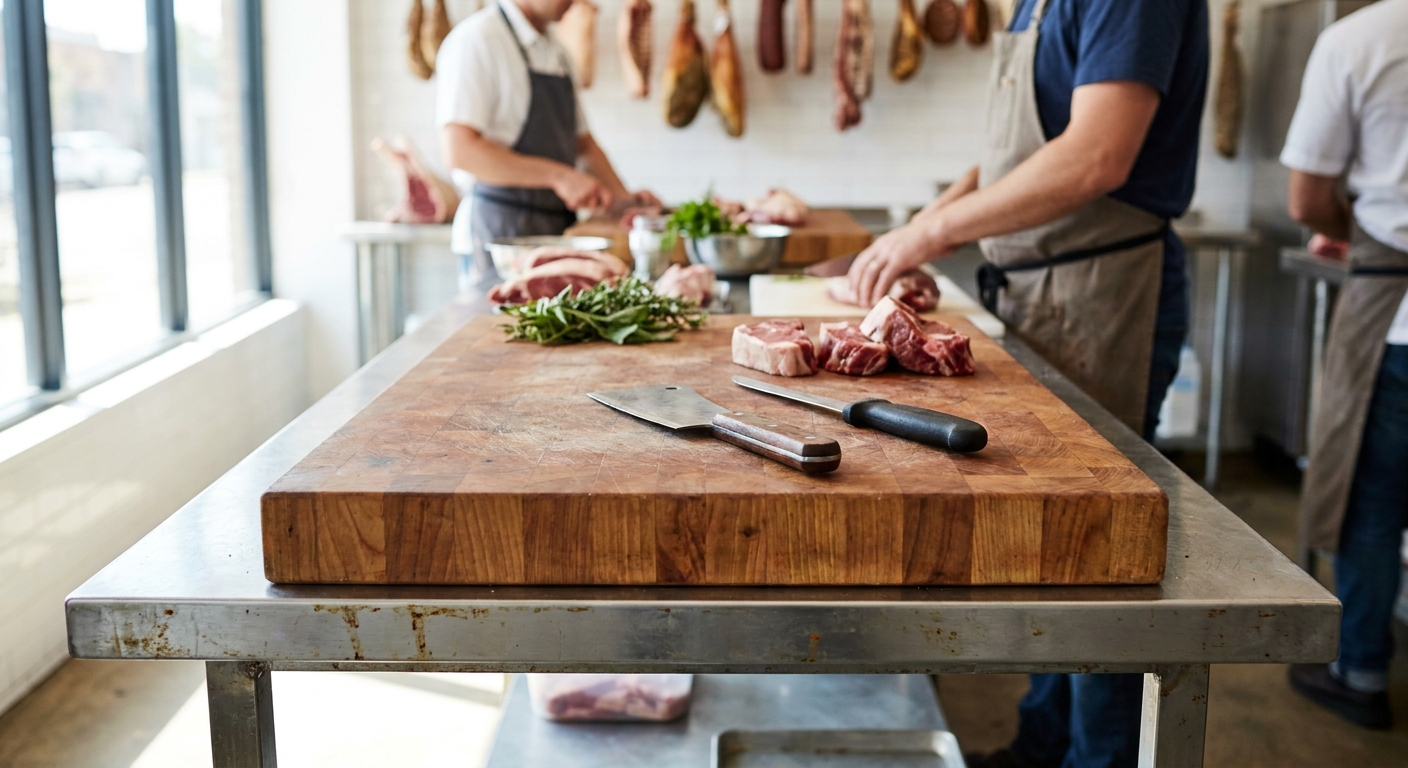
End grain boards show the wood fibres standing on end, so a knife or cleaver slides between the fibres instead of slicing across them. That means the surface closes back up after each cut instead of scarring permanently, which matters when you're making hundreds of cuts a day. Edge grain boards are flat-grain and look similar but scar faster under repeated cleaver impact.
Thickness and weight
A board under about 3cm thick flexes under cleaver force and eventually cracks along a seam. Heavier, thicker blocks stay put on a counter without a mat or clamp, which matters when you're working fast and both hands are busy with the knife.
Surface area for whole cuts
A board sized for slicing a loaf of bread won't fit a shoulder or a rack of ribs. Butchers need enough flat surface to break down a primal cut without the meat hanging off the edge onto the counter.
Wood species density
Beech, maple, and walnut are dense hardwoods that resist deep gouging far better than softer woods like pine or poplar on their own. A mixed hardwood block gives you density where it counts and a lighter overall weight than a single dense species.
Food-safe finish and maintenance
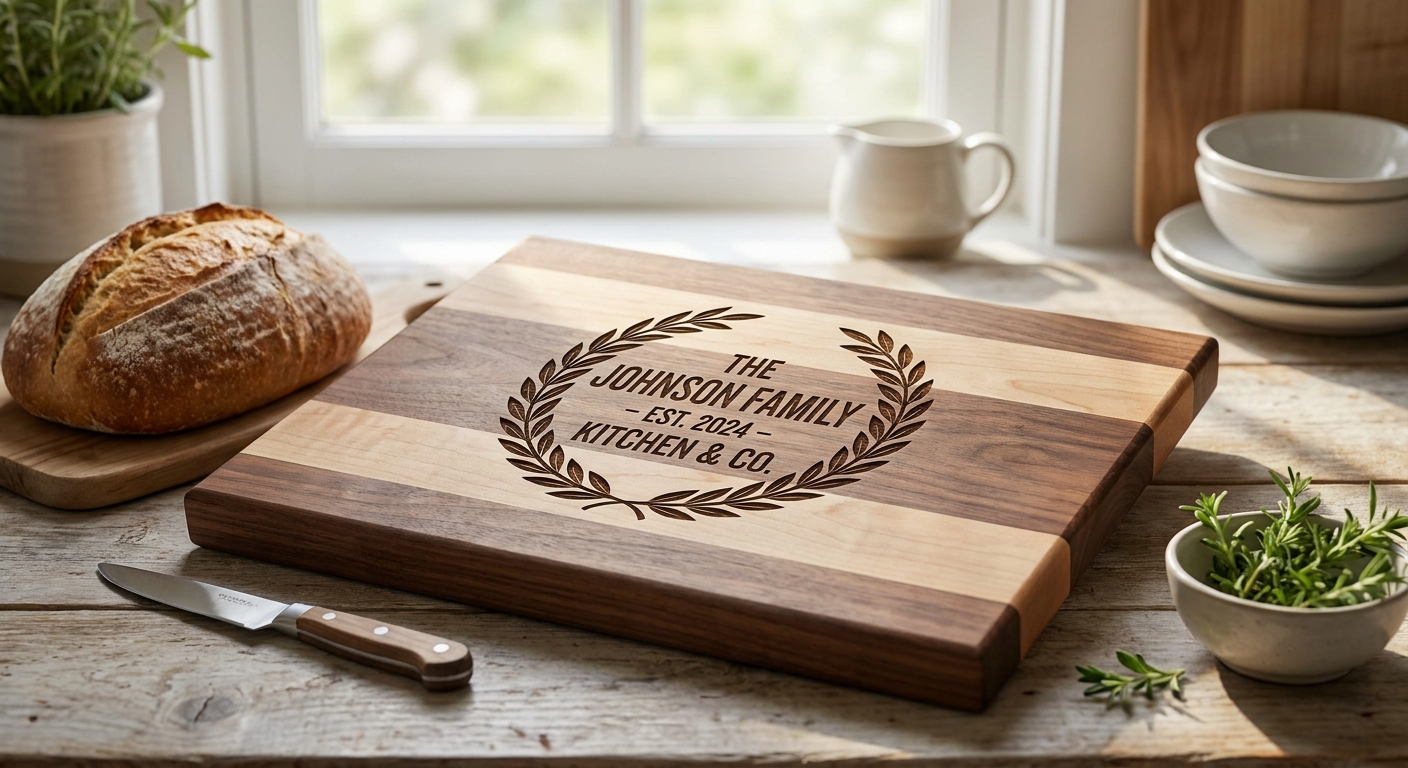
A board only stays food-safe if it's sealed correctly and kept oiled. Food-safe mineral oil and board butter are what Saw Swag uses on its boards - no varnish, no lacquer, nothing that would flake into food. Under daily heavy use that means oiling weekly, not once a year.
End grain butcher blocks built for commercial kitchens follow the same logic chefs use - see how end grain butcher blocks for professional chefs get specced for daily line work.
Top picks for professional butchers
Moat & Grain Turlough Premium Wooden Butcher Block - the all-rounder. Walnut, cherry, maple and beech combined in one block at 170 euro, giving you density where the cleaver lands and a lighter overall board than solid beech alone. Verdict: Buy for daily primal breakdown and mixed meat prep.
Moat & Grain Barrowstone Large Beech & Walnut Butcher Block - the heavy-duty pick. Beech and walnut at 145 euro, built for repeated bone-in cutting where you need a board that won't shift or split under sustained impact. Verdict: Buy if your day is mostly bone-in work.
Moat & Grain Grangestone Large Beech & Poplar Butcher Block - the lighter workhorse. Beech and poplar at 145 euro, a good match for boneless trimming and portioning where you're moving the board around the counter often. Verdict: Consider for lighter daily volume rather than heavy bone breakdown.
Large Red Oak End Grain Butcher Block - the biggest surface. Red oak end grain construction from Black Castle & Hare at 110 euro, built for large cuts that need room to spread out. Verdict: Buy when surface area matters more than species variety.


What to avoid
- Thin edge-grain boards under 2cm. They look identical in a photo to a proper block but flex, warp, and crack within months under daily cleaver use.
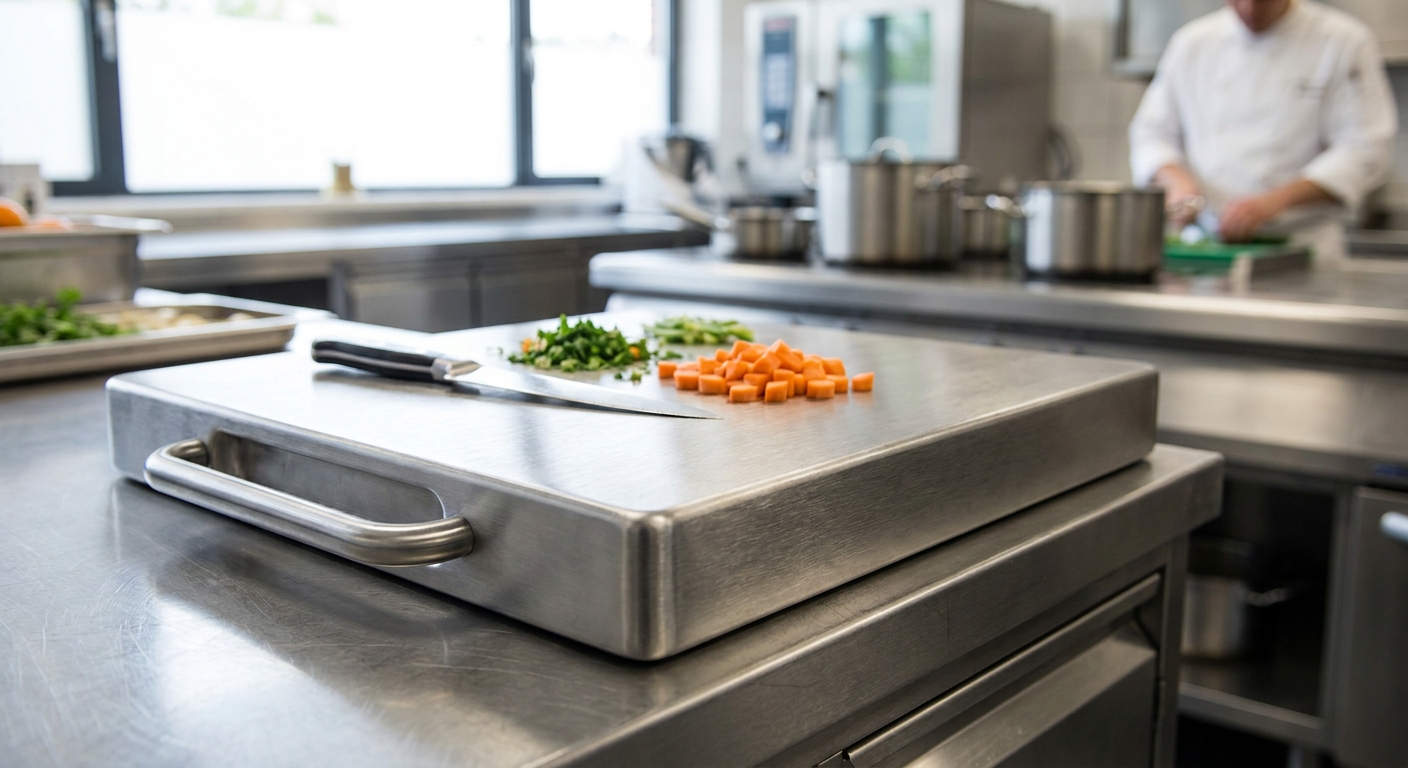
- Stainless steel prep boards for bone-in cutting. A double-sided stainless board like Black Castle & Hare's is fine for light slicing, but repeated cleaver impact on bone will dent the surface and dull blades faster than wood.
- Decorative boards with wide juice grooves. A groove cut into a novelty board, like a chessboard-style chopping surface, eats into your usable prep area and isn't built for sustained heavy cutting.
- Boards left unoiled. Even the densest hardwood dries out and splits if it never sees mineral oil or board butter - the wood species doesn't matter if the finish is neglected.
Verdict comparison
| Board | Wood | Best for | Price | Verdict |
|---|---|---|---|---|
| Turlough Premium Butcher Block | Walnut, cherry, maple, beech | Mixed daily meat prep | 170 euro | Buy |
| Barrowstone Butcher Block | Beech, walnut | Bone-in cutting | 145 euro | Buy |
| Grangestone Butcher Block | Beech, poplar | Boneless trimming | 145 euro | Consider |
| Red Oak End Grain Block | Red oak | Large cuts, high surface area | 110 euro | Buy |
Before your first cut, run a new block through a proper break-in - the guide on seasoning a new end grain butcher block before first use covers the oil schedule that stops early cracking.
FAQ
What is the best chopping board for professional butchers in 2026?
A thick end grain hardwood block, at least 3cm deep, is the best chopping board for professional butchers in 2026. Dense species like beech, maple, and walnut resist deep cleaver marks far longer than edge grain or softwood boards.
Is end grain or edge grain better for butchers?
End grain is better for butchers because the wood fibres stand upright and close back after each cut instead of scarring. Edge grain boards look similar but show permanent knife marks much faster under daily cleaver use.
How thick should a butcher's chopping board be?
A butcher's chopping board should be at least 3cm thick to resist flexing and cracking under repeated cleaver impact. Thinner boards under 2cm tend to warp within months of heavy daily use.
Can you use a wooden board for raw meat safely?
Yes, a solid hardwood board is safe for raw meat as long as it's sealed with a food-safe finish like mineral oil and cleaned properly after each use. Wood's natural fibres actually trap and hold fewer surface bacteria than a scored plastic board.
How often should a butcher's board be oiled?
Under daily heavy use, a wooden butcher block should be oiled with food-safe mineral oil weekly, with board butter applied every few weeks for deeper conditioning. Skipping oiling is the main reason blocks dry out and split.
Is stainless steel better than wood for a butcher's board?
No, stainless steel dulls knives faster and dents under repeated bone-in cutting, while a hardwood board absorbs impact and keeps an edge sharper longer. Stainless suits light slicing tasks, not sustained cleaver work.
How big should a butcher's chopping board be?
A butcher's chopping board should be large enough to fit a whole primal cut without meat hanging off the edge, typically a large-format board rather than a standard kitchen size. Extra surface area also gives more room to work quickly without crowding.
What wood is best for a heavy-duty butcher block?
Beech, maple, and walnut are the best woods for a heavy-duty butcher block because of their density and resistance to gouging. A mixed hardwood block combines that durability with a lighter overall weight than a single dense species.
One last thing
The board that fails first usually isn't the cheapest one - it's the one nobody ever oils. A 170 euro block left dry for six months will crack before a 75 euro board that gets mineral oil every week. Buy for the wood and the grain direction, then actually maintain it.