An end grain cutting board takes nightly chopping without scarring the way a flat face-grain board does — here's which boards in the current 2026 Saw Swag range earn a Buy for daily kitchen use, and which butcher blocks are better suited to serving than to onions and garlic every evening.
- The Large Red Oak End Grain Butcher Block (110.00) is the strongest true end grain cutting board for daily use in 2026 - Buy.
- The Chessboard Rubberwood End Grain Butcher Block (74.99) is the cheapest genuine end grain option in the range - Buy.
- Multi-wood boards marketed as butcher block but without confirmed end grain construction suit serving, not nightly chopping - Hold.
- Reoiling with mineral oil and board butter matters more to lifespan than which end grain cutting board you buy - do it monthly.
Why this matters
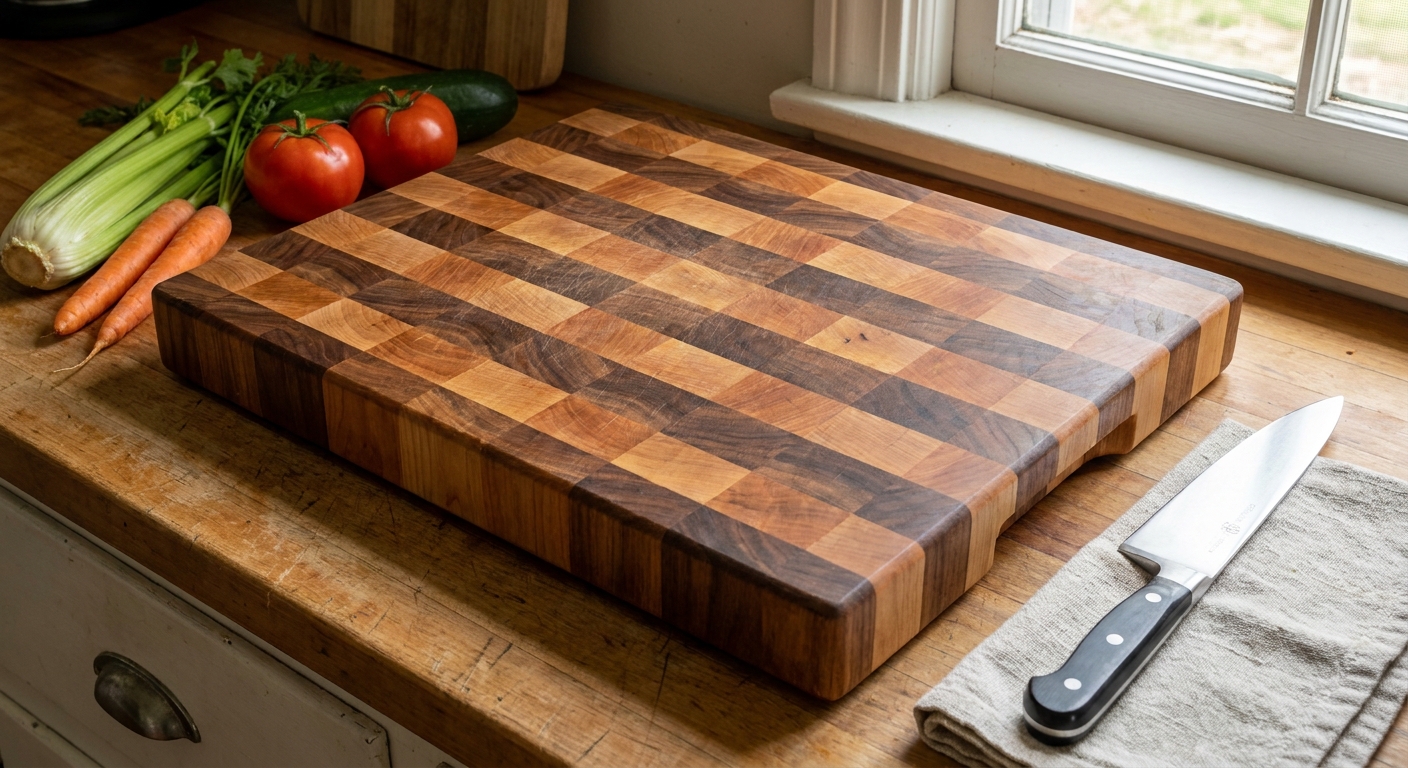
End grain construction turns the wood so the knife lands between the fibres instead of across them. The surface parts around the blade and closes back up, which is why a genuine end grain cutting board shows far fewer knife marks after a year of nightly onion, garlic, and meat prep than a flat-sawn board of the same thickness.
Saw Swag builds its boards and butcher blocks in Co Kildare, and the gap between a true end grain block and a board that just carries "butcher block" as a marketing label matters more for daily chopping than the price does. A buyer looking at product photos online can't run a finger along the grain to check which one they're getting - that's the real problem behind most "end grain cutting board" searches in 2026, and it's what this list is built to answer.
“If a board flexes when you press a chef's knife into it, it's an edge grain board wearing a butcher block label.”
How these boards get ranked
Each board here is assessed against four things: whether the construction is genuinely end grain (fibres running vertical, visible as a checkerboard or block pattern on the surface) rather than edge grain dressed up as "butcher block"; the hardwood species and how it holds up to a chef's knife daily; board thickness and mass, since a heavier board sits still on a worktop instead of sliding; and the finish system, since a board that only takes mineral oil and board butter stays food-safe for chopping raw meat and veg, unlike anything sealed with a hard varnish.
This isn't lab testing - it's based on the construction details and materials listed for each board in the current 2026 range, plus what those specs mean for a kitchen used every day rather than once a month for a cheese platter.
The ranked list
1. Large Red Oak End Grain Butcher Block Chopping Board — the daily-use pick
Red oak end grain, priced at 110.00. This is the board built for nightly rotation: garlic one minute, raw chicken the next, bread the next. The end grain surface takes repeated knife contact without splitting along the grain line, which matters more here than on a board that only comes out for guests. Verdict: Buy.
2. Black Castle & Hare Chessboard Rubberwood End Grain Butcher Block — the budget entry
Genuine end grain construction in rubberwood, priced at 74.99, styled as a chessboard on one side. It's the cheapest true end grain cutting board in the range and still holds the same fibre-direction advantage as the pricier red oak block - you're paying less for size and species, not for a different construction method. Verdict: Buy.
3. Moat & Grain Turlough Premium Wooden Butcher Block — the multi-wood upgrade
Walnut, cherry, maple and beech combined, priced at 170.00. It's the most expensive board in this list and the most visually striking, built for heavy meal prep and hosting. The listing doesn't confirm end grain construction the way the two boards above do, so treat it as a substantial, good-looking butcher block rather than a confirmed end grain buy if that specific construction is the deciding factor for you. Verdict: Hold.
4. Moat & Grain The Grangestone Large Beech & Poplar Butcher Block — the everyday alternative
Beech and poplar, priced at 145.00, built for daily prep in an Irish kitchen. Same caveat as the Turlough above: it's marketed as a butcher block, not confirmed as end grain, so it's a solid daily board on its own terms rather than a like-for-like swap for the red oak pick. Verdict: Hold.


Comparison table
| Board | Construction | Wood | Price | Verdict |
|---|---|---|---|---|
| Large Red Oak End Grain Butcher Block | True end grain | Red oak | 110.00 | Buy |
| Chessboard Rubberwood End Grain Butcher Block | True end grain | Rubberwood | 74.99 | Buy |
| Turlough Premium Wooden Butcher Block | Butcher block, construction unconfirmed | Walnut, cherry, maple, beech | 170.00 | Hold |
| The Grangestone Large Butcher Block | Butcher block, construction unconfirmed | Beech, poplar | 145.00 | Hold |
Where to buy an end grain cutting board in Ireland
- Ask what "end grain" actually means on the listing. A board described only as "butcher block" without confirming the fibre direction may be edge grain - fine for serving, not built the same way for daily knife contact.
- Check the finish system before you check the price. A board finished with food-safe mineral oil and board butter can be reoiled for years; a board sealed with varnish can't be maintained the same way once it dries out or cracks.
- Plan for maintenance from day one. Reoiling monthly with mineral oil and reapplying board butter every few months keeps an end grain cutting board from drying and splitting - the how-to guide on oiling a wooden chopping board to keep it lasting covers the schedule and technique.
FAQ
What is an end grain cutting board?
An end grain cutting board is built from wood blocks turned so the fibres run vertically, facing up at the surface. That orientation lets the wood absorb a knife's edge rather than splitting along the grain, which is why end grain boards last longer under daily chopping in 2026 kitchens than face-grain boards of the same thickness.
Is end grain better than edge grain for daily chopping?
Yes, for boards used every day, end grain holds up better because the knife edge parts the fibres instead of cutting across them. Edge grain boards are still fine for lighter, occasional use or serving, just not for nightly meat and veg prep.
How do you maintain an end grain chopping board?
Wipe it clean and dry it standing up after each use, then reoil with a food-safe mineral oil roughly once a month. Board butter, applied every few months, adds a heavier protective layer that mineral oil alone doesn't provide.
How much does a genuine end grain cutting board cost in Ireland in 2026?
True end grain boards in the current Saw Swag range start at 74.99 for a smaller rubberwood block and run to 110.00 for a larger red oak board. Multi-wood butcher blocks without confirmed end grain construction run from 145.00 to 170.00.
Can you put an end grain board in the dishwasher?
No - dishwasher heat and prolonged soaking pull the moisture out of solid wood and cause cracking or warping. Hand wash and dry standing up, then reoil regularly instead.
What wood is best for an end grain cutting board?
Dense hardwoods like red oak hold up well to daily knife work because they're hard enough to resist deep gouging but not so hard they dull blades quickly. Softer woods like rubberwood still work in end grain construction, just at a lower price point and with a bit more wear over time.
Is butcher block the same as end grain?
Not always - "butcher block" is often used as a general term for a thick wooden board, but only some butcher blocks are actually built with end grain construction. Check the listing for confirmation of fibre direction rather than assuming the two terms mean the same thing.
How long does an end grain board last with proper care?
With monthly mineral oil and periodic board butter, a solid hardwood end grain board can serve daily for years before it needs sanding back. Skipping maintenance is what shortens the lifespan, not the construction itself.
One last thing
The cheapest board in this list, the Chessboard Rubberwood at 74.99, is genuinely end grain - the same fibre-direction advantage as the 110.00 red oak board, just in a smaller size and a softer species. If budget is the deciding factor in 2026, that's the one to check first, not the multi-wood boards priced higher but without confirmed end grain construction.