An end grain butcher block for chefs takes the daily battering of a knife edge and heals itself, stroke after stroke, in a way flat-sawn boards never do. This guide covers what actually separates a true end grain block from a board that just borrows the name, plus five picks worth your money in 2026.
- Black Castle & Hare's Large Red Oak End Grain Butcher Block (EUR110) is the clearest true end grain butcher block for chefs in this lineup - Buy.
- The Chessboard Rubberwood End Grain block (EUR74.99) suits lighter prep and display use, not daily heavy chopping - Consider.
- Multi-hardwood blocks like the Turlough (EUR170) give you size and mixed timber but aren't sold as end grain - Consider, not a substitute.
- Board thickness and wood hardness matter more than price for anyone prepping daily like a professional chef.
- Mineral oil and board butter, not water or dishwashers, keep any hardwood block food-safe through 2026 and beyond.
Why this matters
Most boards sold as "butcher blocks" in 2026 are edge grain or face grain construction dressed up with a butcher's name. That's not a scam, it's just marketing shorthand, but it matters if you're prepping for hours a day and want a surface that shrugs off knife marks instead of showing every cut.
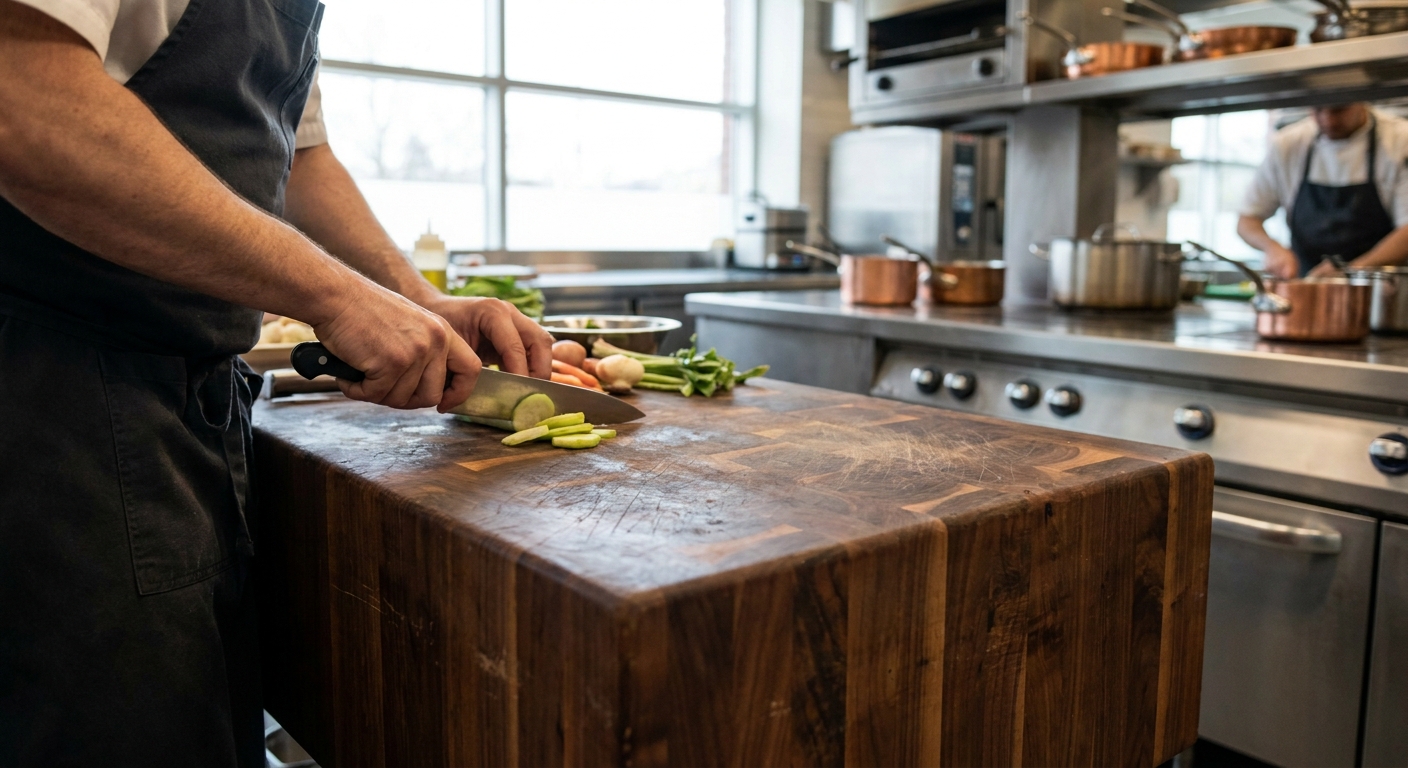
End grain means the wood fibres stand upright, end-on to the blade, so the knife slides between fibres rather than slicing across them. That's why professional kitchens have used it for generations, and why Saw Swag stocks a small, deliberate range rather than a wall of look-alikes.
Who this is for
This guide is for anyone prepping like a professional chef at home: people cooking daily, hosting often, or running a small kitchen business who need a board that survives real knife work, not just Sunday roast duty. If you chop vegetables for twenty minutes a week, most solid hardwood boards will do fine - this is for the heavier user.
What to look for in an end grain butcher block for chefs
True end grain construction
Check the listing describes the wood grain running vertically, not the surface pattern. A block marketed with a decorative top but no mention of end grain construction is very likely edge grain wearing the name. This is the single biggest source of buyer confusion in 2026.
Wood species and hardness
Oak and walnut sit toward the tougher end of the hardwoods used in Irish-made blocks, while beech and poplar are workable but softer under repeated heavy chopping. For daily professional-style use, harder species hold their surface longer between refreshes.
Size and weight for your prep volume
A block under about 40cm across gets cramped fast when you're breaking down a chicken or prepping for six people. Weight matters too - a heavier block stays put on the counter without a mat, which matters mid-service when your hands are already full.
Food-safe finish and maintenance
A block finished with food-safe mineral oil and conditioned with board butter stays sealed against moisture without introducing anything you don't want near raw ingredients. Ask how it's finished before you ask how it looks - the finish is what keeps the surface safe for daily knife contact.
Thickness for daily durability
Thinner boards flex and can crack under repeated heavy use, especially with a cleaver or chef's knife. A genuinely daily-use block should feel substantial in the hand, not like something built for occasional charcuterie nights.
Irish-made provenance and traceability
Knowing where a block was made, and by whom, matters when you can't run your hand over the grain before buying online. Close-up photography of the actual grain, edge profile, and thickness tells you more than a product description ever will.


Top picks for 2026
Large Red Oak End Grain Butcher Block Chopping Board, Black Castle & Hare - EUR110 The hook: this is the block that actually earns the end grain name in this lineup. Red oak is hard enough to take daily knife contact without showing every cut within a week, and the price sits well below the premium multi-hardwood options. Buy if you want a genuine daily-prep end grain surface without paying for a size you don't need.
Chessboard Rubberwood End Grain Butcher Block, Black Castle & Hare - EUR74.99 The hook: the entry point into true end grain construction, with a chessboard surface pattern that doubles as a serving piece. Rubberwood is softer than oak, so it suits lighter daily chopping and entertaining rather than nonstop professional-style prep. Consider it for a second board or a gift; Skip it if it's your only board and you cook heavy meals daily.
Moat & Grain Turlough Premium Wooden Butcher Block - EUR170 The hook: four hardwoods (walnut, cherry, maple and beech) in one block, at the top of this range's pricing. It is not listed as end grain construction, so treat it as a premium multi-wood prep surface rather than a substitute for the self-healing knife feel end grain gives you. Consider for size and visual variety; go end grain first if knife longevity is the priority.
Moat & Grain Grangestone Large Beech & Poplar Butcher Block - EUR145 The hook: the largest working surface in this range, which matters if you're breaking down whole birds or prepping for a full table. Beech and poplar are workable but softer than oak, so expect more visible knife marks over time. Consider it for volume prep where surface area beats surface toughness.
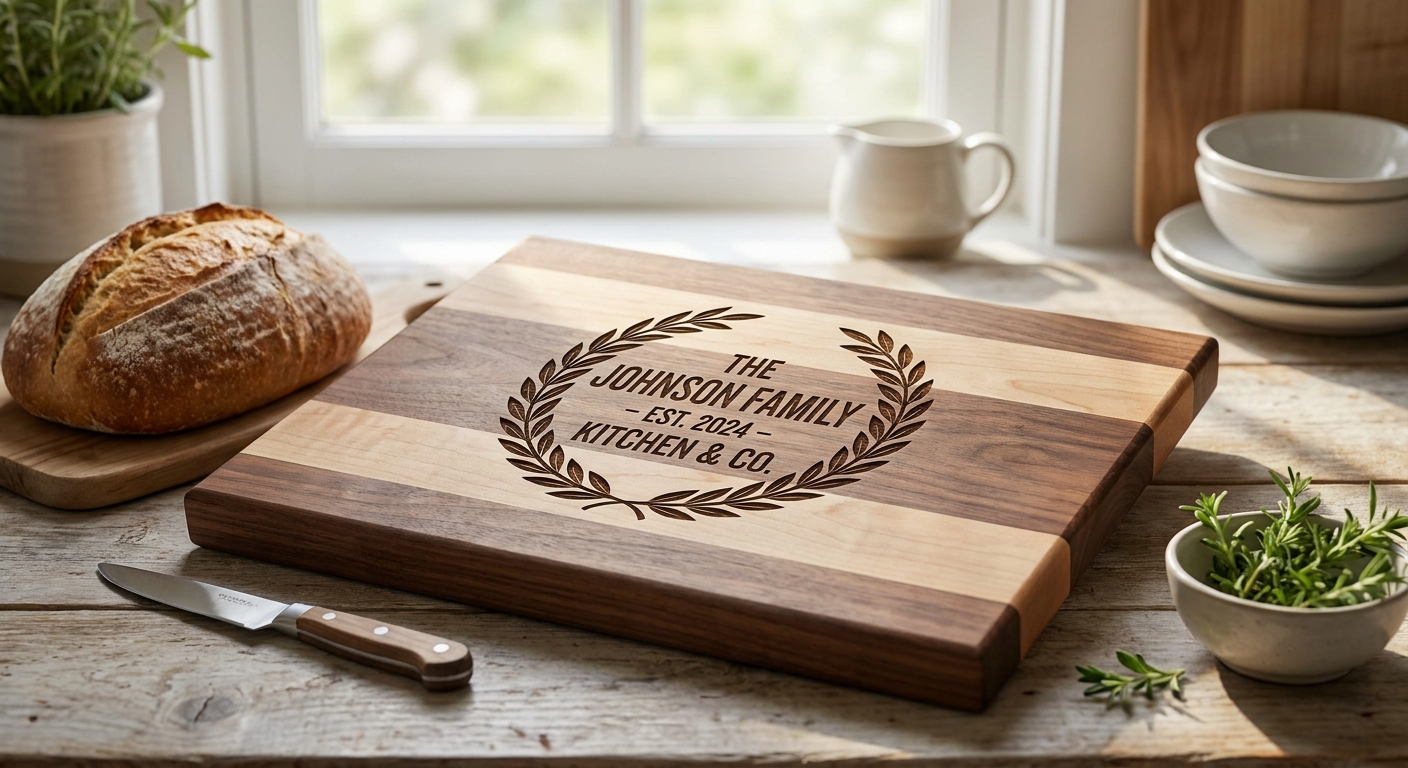
Moat & Grain Barrowstone Large Beech & Walnut Butcher Block - EUR145 The hook: a block built as much for gifting as for daily use, pairing beech with walnut for a two-tone finish that photographs well for a wedding or anniversary gift. It carries the same softer-wood caveat as the Grangestone for heavy daily chopping. Consider as a gift-and-use piece; Buy the red oak end grain block instead if daily knife work is the main job.
“If a board doesn't self-heal after a knife stroke, it isn't end grain, no matter what the listing calls it.”
What to avoid
- Boards marketed as "butcher block" with no grain description. If the listing never says end grain, assume it's edge or face grain and priced for what it is, not what it's called.
- Thin decorative boards bought for daily prep. A board built for occasional charcuterie nights will flex and crack faster under a chef's knife used every day in 2026.
- Anything recommended for the dishwasher. Heat and standing water pull the finish out of solid hardwood fast, whether it's end grain or not, and shorten the life of any block on this list.
Verdict comparison
| Block | Wood | Grain type | Price | Verdict |
|---|---|---|---|---|
| Large Red Oak End Grain, Black Castle & Hare | Red oak | End grain | EUR110 | Buy |
| Chessboard Rubberwood End Grain, Black Castle & Hare | Rubberwood | End grain | EUR74.99 | Consider |
| Turlough Premium, Moat & Grain | Walnut, cherry, maple, beech | Not sold as end grain | EUR170 | Consider |
| Grangestone Large, Moat & Grain | Beech, poplar | Not sold as end grain | EUR145 | Consider |
| Barrowstone Large, Moat & Grain | Beech, walnut | Not sold as end grain | EUR145 | Consider |
Once a block arrives, how you oil a wooden chopping board to keep it lasting matters as much as which block you bought - mineral oil and board butter are what keep any of these surfaces food-safe through daily 2026 use, not the wood species alone.
FAQ
What's the best end grain butcher block for chefs in 2026?
The Large Red Oak End Grain Butcher Block from Black Castle & Hare (EUR110) is the clearest true end grain pick in 2026 for daily professional-style prep. Its red oak construction and confirmed end grain build hold up to repeated heavy knife work better than edge grain alternatives.
Is end grain better than edge grain for a chef's daily prep?
Yes, end grain is better for daily heavy knife work because the wood fibres sit upright and close back over the knife's path. Edge grain boards show cut marks faster and wear down sooner under professional-style volume.
How thick should a professional butcher block be?
A block for daily heavy use should feel substantial and solid in the hand, thick enough to resist flexing under a chef's knife or cleaver. Thinner boards built for occasional use are more prone to cracking under that kind of repeated pressure.
How do you maintain an end grain butcher block?
Condition it regularly with food-safe mineral oil and board butter to keep the surface sealed against moisture. Skip the dishwasher and standing water entirely, since both pull the oil and moisture balance out of solid hardwood fast.
How much does an end grain butcher block cost in Ireland in 2026?
End grain blocks in this range run from EUR74.99 for a compact rubberwood option to EUR110 for a larger red oak block. Multi-hardwood blocks that aren't sold as end grain run higher, up to EUR170, for size and wood variety rather than grain construction.
Can you put an end grain butcher block in the dishwasher?
No, dishwashers use heat and standing water that strip the oil finish and can warp or crack solid hardwood. Wipe it down and re-oil it periodically instead.
Is oak or walnut better for a butcher block?
Oak tends to hold up better under daily heavy knife work because it sits toward the harder end of common butcher block hardwoods. Walnut is workable and attractive but shows wear a little sooner under the same volume of use.
Do end grain boards actually dull knives less than other boards?
Yes, the upright fibre structure of end grain lets the blade slip between fibres rather than across them, which is gentler on the edge over time. That's the main practical reason professional kitchens favour end grain over edge or face grain construction.
One last thing
The single fastest way to spot a genuine end grain butcher block for chefs before you buy: search the listing for the words "end grain" itself. If they're missing, you're looking at a different product wearing the same name, priced accordingly but built for a lighter job than daily professional prep in 2026.