Season a new end grain butcher block before the first chop, and you buy yourself years of daily use instead of a board that checks and greys within a season. End grain absorbs oil faster than face grain, which is exactly why skipping this step costs you more, more often.
- Season an end grain butcher block with 3-4 coats of food-safe mineral oil before first use, not one.
- Skip the board butter finish coat and end grain dries out and cracks within a few months, not years.
- Saw Swag's Turlough butcher block and Red Oak end grain board both need the same first-use routine.
- Reoil weekly for the first month, then monthly — end grain drinks oil faster than a flat serving board.
Why this matters
End grain construction is the reason a butcher block survives daily knife work better than a flat-cut board — the wood fibres stand upright, so the blade slips between them instead of slicing across them. That same upright grain is also thirstier for oil, and thirstier wood dries out faster if you leave it bare.
A new block from Saw Swag or anywhere else arrives dry from the workshop. No factory finish, no wax coating — just raw hardwood waiting for its first feed of oil. Put it straight into service without seasoning and you're asking untreated end grain to survive water, acid from lemons and tomatoes, and knife traffic all at once. It won't hold up past a few weeks before you see grey patches and hairline surface checks.
What you'll need
- Food-safe mineral oil (not vegetable or olive oil — those go rancid)
- Board butter or a beeswax-based conditioner for the final coat
- A lint-free cloth or clean cotton rag
- A dry kitchen towel
- 24-48 hours of counter space where the block can sit undisturbed
Skip cooking oils entirely. Olive, vegetable, and sunflower oil sit near the surface, turn sticky, and go rancid inside a fortnight — food-safe mineral oil and a proper board butter are the only combination that actually cures into the wood rather than sitting on top of it.
The steps
1. Wipe the block down dry
Run a dry cloth over every face of the block, including the sides and underside, to clear sawdust and workshop dust before any oil goes on. Trapped dust under an oil coat leaves a rough, gritty finish that never smooths out later. This takes two minutes and saves you from re-sanding a brand new board.
2. Flood the end grain with the first coat
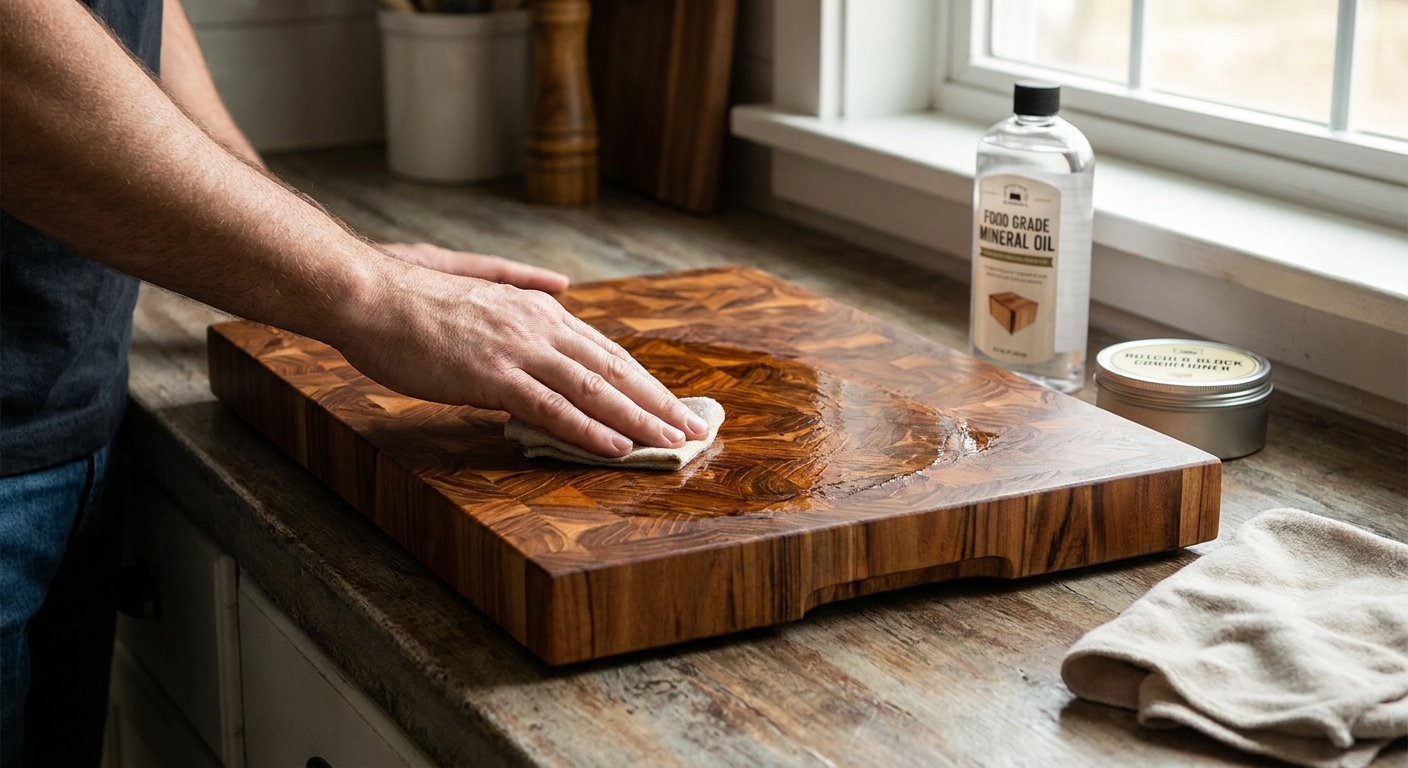
Pour mineral oil directly onto the top surface and spread it with the cloth in the direction of the grain, working it into every pore you can see. End grain will look almost dry again within 10-15 minutes because it's pulling the oil straight in — that's normal and it's the whole reason end grain needs more oil than a flat board. Don't be shy with quantity on this first coat.
3. Let it soak for a full hour
Leave the block flat and undisturbed for 60 minutes minimum before touching it again. Rushing this step means the second coat sits on top of oil that hasn't penetrated yet, which wastes product and leaves a tacky surface. Set a timer — it's easy to forget and come back after five minutes instead of sixty.
4. Apply two more coats, same method
Repeat the flood-and-spread process twice more, waiting roughly an hour between each. Three to four total coats is the standard for a new end grain block in 2026, and you'll notice each coat soaks in a little slower than the last as the wood fills up. The block should look uniformly wet, not patchy, before you move on.
5. Wipe off every trace of excess oil
After the final coat has sat for an hour, buff the whole surface hard with a clean dry cloth until nothing transfers to your hand. Leftover surface oil turns gummy and attracts dust, and it's the single most common reason a newly oiled board feels sticky instead of smooth. Buff harder than feels necessary — you want the wood dry to the touch, not glossy.
6. Finish with a coat of board butter
Work a thin layer of board butter into the surface once the oil has fully absorbed, usually the next day. Board butter combines oil with beeswax to seal the pores and slow down moisture loss, giving you a finish that lasts weeks rather than days between top-ups. This is the step people skip most often, and it's the one that separates a board that stays smooth from one that roughens up within a month.
7. Let it cure a full 24 hours before first use
Give the finished block a full day on the counter before it touches food. Cutting into a board before the butter has set pushes uncured product into your food and undoes some of the protection you just built up. Patience here costs you one day; skipping it costs you the whole seasoning job.


8. Set a reoiling routine for the first month
Oil the block once a week for the first four weeks, then drop to once a month once the wood stops drinking oil as fast. New end grain takes longer to reach saturation than an older, well-used board, so the first month is the heaviest maintenance period you'll ever put in. After that, a monthly oiling and occasional board butter top-up keeps it in shape indefinitely.
Troubleshooting
The surface feels sticky after oiling. You left too much oil sitting on top instead of wiping it off — go back over the whole surface with a dry cloth and buff harder than you think you need to.
Dry patches show up a day after the last coat. Those spots pulled in oil faster than the rest of the block. Spot-treat with one more coat directly on the dry area and let it sit an hour before wiping.
The block smells faintly of oil for days. Mineral oil takes longer to fully settle in cold kitchens. Leave it on an open counter rather than in a cupboard and the smell fades within 48-72 hours.
You see fine surface checks after the first month. This usually means the block dried out between oilings — tighten your reoiling schedule back to weekly for a fortnight to rehydrate the wood.
Water sits on the surface instead of beading off. The board butter coat has worn thin. Reapply a thin layer and let it cure overnight before using the block again.
The finish looks patchy or cloudy. Excess board butter left unbuffed causes this. Buff the surface with a clean dry cloth until it looks even, not just until it feels dry.
Tools and resources
- Food-safe mineral oil, applied generously on the first three to four coats
- Board butter for the sealing finish coat
- A lint-free cloth for application and buffing
- A dry counter space with 24 hours to spare before first use
- A longer-term care routine — the full breakdown on frequency and technique lives in the guide to oiling a wooden chopping board
What to do next
Once the initial seasoning is done, the routine gets simpler. Monthly oiling with an occasional board butter refresh is enough to keep an end grain butcher block from ever drying out, and the same principles apply whether you've got a Turlough butcher block, a Red Oak end grain board, or any other solid hardwood piece on your counter in 2026.
FAQ
How many coats of oil does a new end grain butcher block need?
A new end grain butcher block needs 3-4 coats of food-safe mineral oil before first use in 2026. End grain absorbs oil faster than face-grain boards, so the extra coats fill the wood pores properly before the block sees a knife.
Can I use olive oil to season a butcher block?
No — olive oil and other cooking oils go rancid inside a fortnight and leave a sticky, smelly finish. Food-safe mineral oil and board butter are the only combination that cures into the wood without spoiling.
How long should a new butcher block cure before first use?
Give a freshly oiled and buttered block 24 hours minimum to cure before cutting on it. Using it earlier pushes uncured product into your food and undermines the seasoning job.
Is board butter necessary or is mineral oil enough?
Mineral oil alone hydrates the wood but board butter's beeswax content seals the surface and slows moisture loss. Skipping the butter coat means reoiling far more often to get the same protection.
Why does my new end grain block feel dry again within hours of oiling?
That's expected on the first coat — end grain pulls oil in fast because the wood fibres run vertically and soak up liquid like a straw. Repeat coats an hour apart until the surface stays wet-looking after soaking.
How often should I reoil a new butcher block after seasoning?
Reoil weekly for the first month, then monthly once the wood stops absorbing oil quickly. A board that sees heavy daily chopping may need reoiling every two to three weeks even after the first month.
Can I season an end grain block with just one coat of oil?
One coat is not enough for end grain — the wood pores stay only partially filled and the block will dry out and check within weeks. Three to four coats over several hours is the minimum for lasting protection.
Does the type of hardwood change how I season it?
The seasoning method stays the same across walnut, cherry, maple, beech, and oak — mineral oil coats followed by board butter. Denser hardwoods like beech and oak simply take slightly longer between coats to fully absorb.
One last thing
The wood doesn't stop absorbing oil once it looks saturated — it just slows down. Boards that get a genuine weekly oiling in month one, not a token wipe, are the ones still holding their finish a year later without a single crack showing through.