A wooden chopping board that warps usually wasn't ruined by cutting — it was ruined by how it sat between uses. Storage habits, not knife work, are what quietly bend, crack or split solid hardwood over a year of kitchen life.
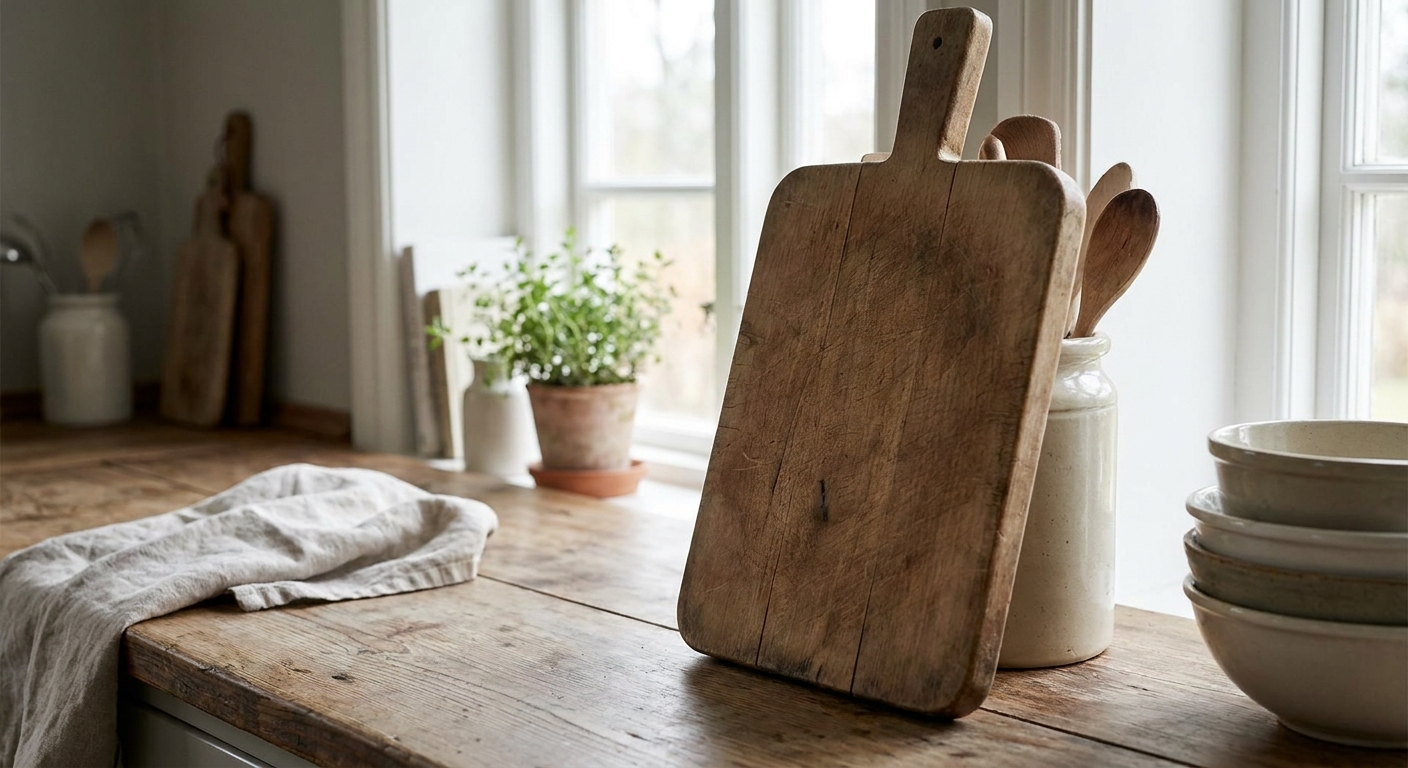
- Store a wooden chopping board upright on its edge, never flat against a hot press or radiator.
- Uneven drying is the main cause of warping — both faces need the same airflow, always.
- Oil the board before storing it for more than a few days; dry wood pulls moisture unevenly.
- Skip the dishwasher and skip stacking boards flat against each other for weeks at a time.
- A Saw Swag chopping board stored correctly should hold its shape for years, not months.
Why this matters
Solid wood moves. It absorbs and releases moisture constantly, and if one face of a board dries faster than the other, the wood fibres shrink at different rates. That's what causes the classic warp — a board that no longer sits flat on the counter. It's a physics problem, not a manufacturing fault, and it applies to any well-made hardwood board, from a basic end-grain block to a Saw Swag piece finished with mineral oil and board butter.
Good storage habits solve the problem before it starts. Bad ones — flat stacking, direct heat, standing water left on one side — create the exact uneven drying that bends a board within weeks. Get storage right in 2026 and a solid hardwood board should genuinely outlast a laminate or plastic one by years.
What you'll need
- A dry cupboard shelf, plate rack, or vertical board holder
- A soft, dry tea towel for wiping down after washing
- Food-safe mineral oil for monthly conditioning
- Board butter for a deeper seal every few months
- A spot away from radiators, hot presses, ovens, and direct sunlight
- 10 minutes, once a week, to check the board is sitting properly


The steps
1. Dry it standing up, not lying flat
After washing, stand the board on its edge in a rack rather than laying it flat on a draining board. Lying flat means the bottom face stays damp against the counter while the top dries in open air — that mismatch is what pulls a board out of shape. Standing it up lets both faces dry at the same rate. Expect a fully dry board within 2 to 3 hours in a normal kitchen. Common mistake: leaning it against a wall with one edge resting in a puddle of drained water — dry the base of the rack too.
2. Keep it out of direct sunlight and heat
A board left on a windowsill or beside a hot press dries out on one side far faster than the other. That uneven heat exposure is one of the fastest routes to warping, sometimes within a single week of hot weather. Store it in a cupboard, on a shelf, or in a rack at least a metre from any direct heat source. Common mistake: propping the board against the oven to "air it out" after cooking — that's the worst spot in the kitchen for it.
3. Give it airflow on all sides
Wood needs to breathe evenly. A board jammed flat between two baking trays in a drawer gets no airflow on either face and traps residual moisture, which encourages both warping and, over time, mould. A vertical rack, a slotted shelf, or simply leaning it against a wall with a small gap behind gives air access to both sides. Expect the surface to feel dry to the touch within a few hours if airflow is right.
4. Oil it before you put it away for more than a few days
Dry, unoiled wood absorbs moisture unevenly and faster than conditioned wood. Before storing a board for any stretch longer than a couple of days — after a holiday, before a house move, before gifting it — give it a coat of mineral oil and let it sit for at least 20 minutes before wiping off the excess. This step matters most for boards heading into a cold or damp press over an Irish winter. Common mistake: oiling once and assuming it's covered for the year — most boards need reoiling monthly with normal kitchen use.
5. Separate boards if you're stacking more than one
If storage space means stacking several boards, put a folded tea towel or a thin cork mat between each one. Boards stacked directly on top of each other trap moisture at the contact points, and that trapped damp is enough to cause localised warping over 4 to 6 weeks. A vertical rack avoids this problem entirely and is worth the small cupboard investment if you're rotating more than two boards, such as a grazing board and a daily chopping board.
6. Watch the humidity in the room
A press beside a dishwasher, washing machine, or unvented tumble dryer runs damper than the rest of the kitchen. That constant humidity swing — dry during the day, damp during a wash cycle — stresses the wood fibres repeatedly. Where possible, store boards in a press away from these appliances, or crack the press door for an hour after a wash cycle to let humidity even out.
7. Check for early warp signs monthly
Once a month, set the board flat on the counter and press down gently at each corner. A board that rocks slightly, or lifts at one corner, is showing the first sign of uneven drying — catch it here and a light reoiling plus a week of correct upright storage will usually flatten it back out. Left for months, that early rock becomes a permanent bow that's much harder to correct.
Troubleshooting
- The board rocks on the counter but looks flat. Early-stage warping. Reoil both faces and store it upright for a week rather than flat — most boards recover if caught within the first month.
- One side feels noticeably drier than the other. Uneven storage exposure. Move the board to a spot with even airflow on both faces and oil the drier side more generously for the next two applications.
- The board smells musty after storage. Trapped moisture from stacking or flat storage. Wash, dry fully upright for 24 hours, then oil before returning it to a better-ventilated spot.
- Small surface cracks near the edge. Usually rapid drying from heat exposure, not moisture. Move away from any heat source immediately and apply board butter to slow further moisture loss.
- The board has warped badly and won't sit flat. Wet the concave (dipped) side lightly with a damp cloth, then let it dry flat with a weight on top for 24 to 48 hours — this reverses mild warping in many cases, though a severe bow may be permanent.
- White or grey patches appear on the surface. Mould from trapped damp. Scrub with a mix of coarse salt and lemon, dry fully in open air, then oil once dry.
Tools and resources
- A vertical board rack or plate stand for the press
- Food-safe mineral oil for monthly conditioning
- Board butter for a deeper seasonal seal
- A soft cloth kept specifically for board care, not general kitchen cleaning
- A dry, ventilated cupboard shelf away from the dishwasher, oven, or radiator
What to do next
Storage habits only work alongside a proper oiling routine. If you haven't set one up yet, the full breakdown of when and how to oil a wooden chopping board covers the timing and technique that keeps a board sealed against the moisture swings storage can't fully prevent on its own — read the guide on oiling a wooden chopping board before your next wash cycle.
“A board that rocks on the counter is telling you something before it ever cracks.”
FAQ
What's the best way to store a wooden chopping board?
Store a wooden chopping board upright on its edge in a dry, well-ventilated cupboard or rack, away from direct heat and sunlight. This lets both faces dry evenly, which is the single biggest factor in preventing warping.
Is it bad to store a chopping board flat?
Yes, storing a board flat on a counter or in a drawer often means one face dries slower than the other, and that uneven drying is what causes warping. A vertical position solves the problem in most kitchens.
How often should I oil a board before storing it?
Oil a wooden board roughly once a month with normal use, and always before storing it for more than a few days. Dry wood absorbs ambient moisture unevenly, which speeds up warping during storage.
Can a warped chopping board be fixed?
A mild warp can often be reversed by dampening the concave side and drying the board flat with a weight on top for 24 to 48 hours. Severe, long-standing warps are harder to correct and may be permanent.
Is it safe to stack wooden chopping boards?
Stacking is fine short-term, but boards left stacked directly on each other for 4 to 6 weeks trap moisture at the contact points and can warp locally. Separate stacked boards with a folded cloth or thin mat.
Why does my chopping board smell musty in storage?
A musty smell usually means moisture got trapped during storage, often from stacking flat or sitting in a poorly ventilated press. Wash the board, dry it fully upright, and store it somewhere with better airflow.
Should I keep a chopping board near the dishwasher?
No. Presses beside dishwashers or washing machines run through repeated humidity swings that stress wood fibres. Store boards in a drier part of the kitchen away from appliance heat and steam.
Does board type affect how I should store it?
Thicker end-grain butcher blocks hold moisture longer than thin edge-grain boards, so they benefit even more from upright, ventilated storage. Both still need the same protection from heat and uneven drying.
One last thing
The single habit that prevents most warping isn't oil or racks — it's drying a board standing up the moment it comes off the draining board, every single time, not just when you remember. That one change, kept up through 2026 and beyond, does more to protect a solid hardwood board than any conditioner on its own.