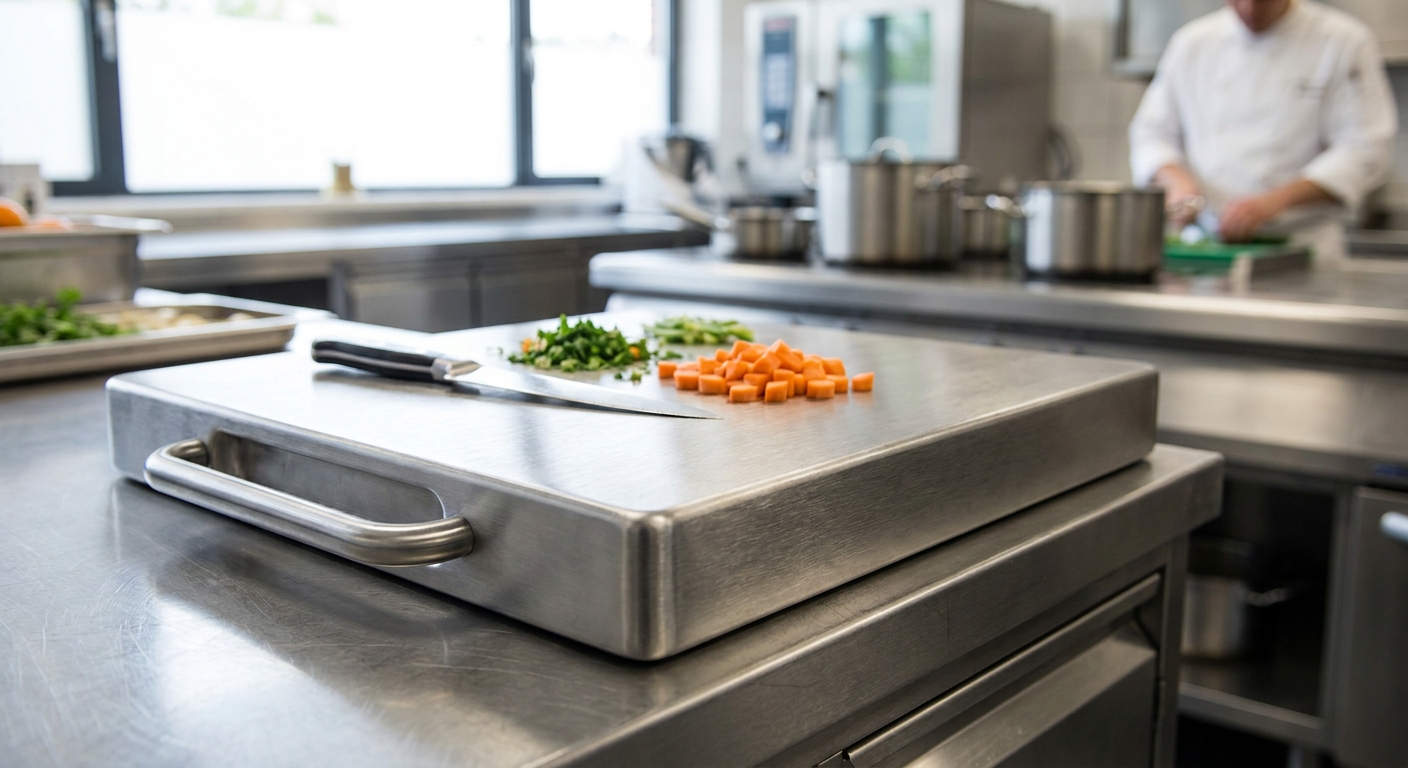
Stainless steel chopping boards clean up fast and never need oil, but skip the basics and they will spot, dull, and pick up smells just like anything else in the kitchen. This guide covers the actual routine for keeping a stainless steel chopping board hygienic and rust-free, plus where a solid hardwood board still does a better job.
- Wash a stainless steel chopping board in hot soapy water after every use - dishwashing doesn't replace a manual scrub on stuck-on food.
- Descale weekly with a 1:3 white vinegar to water rinse to stop water spotting building up on the surface.
- Dry it standing up immediately; a wet stainless steel chopping board left flat on wood or near cast iron can pick up rust transfer within hours.
- The Black Castle & Hare Double-Sided Stainless Steel Chopping Board at 24.99 suits light prep and small kitchens - buy it for that, not for daily meat butchery.
- For a board that takes years of heavy chopping without dulling your knives, a solid hardwood butcher block still outperforms steel.
Why this matters
Stainless steel boards get bought for the wrong reasons more often than not. People assume "steel means indestructible" and then wonder why the surface is covered in fine scratches and water spots within a few months of 2026 use. It's not indestructible - it's low-maintenance in a specific way, and that way has rules.
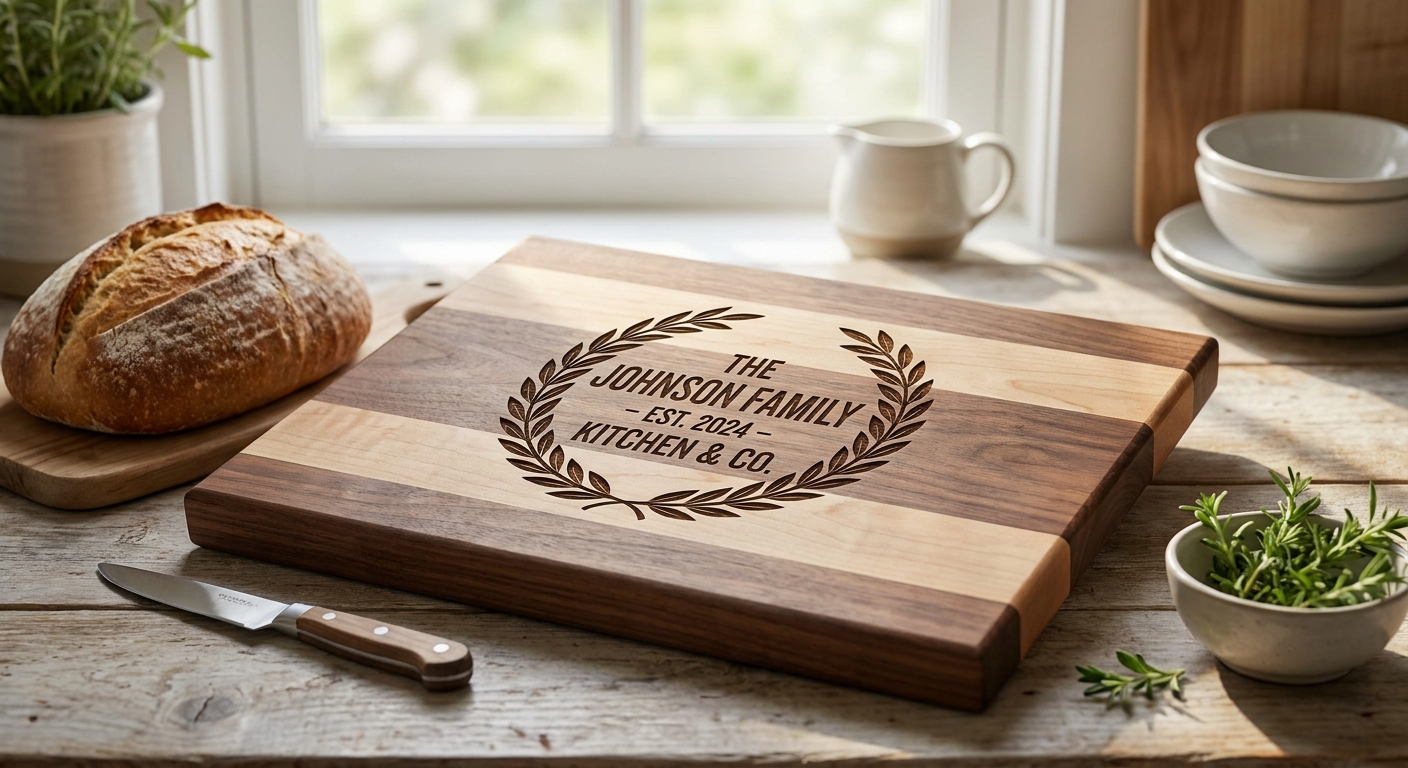
Get the routine right and a stainless steel chopping board will do its job for years: quick wipe-downs, dishwasher-safe convenience, no oiling schedule. Get it wrong and you're looking at rust freckling, dulled knives, and a board that looks worse at year one than a well-kept hardwood board looks at year five. Saw Swag works mostly in solid hardwood for that exact reason, but plenty of kitchens run both a steel board and a wood one side by side, and that's a sensible setup.
What you'll need
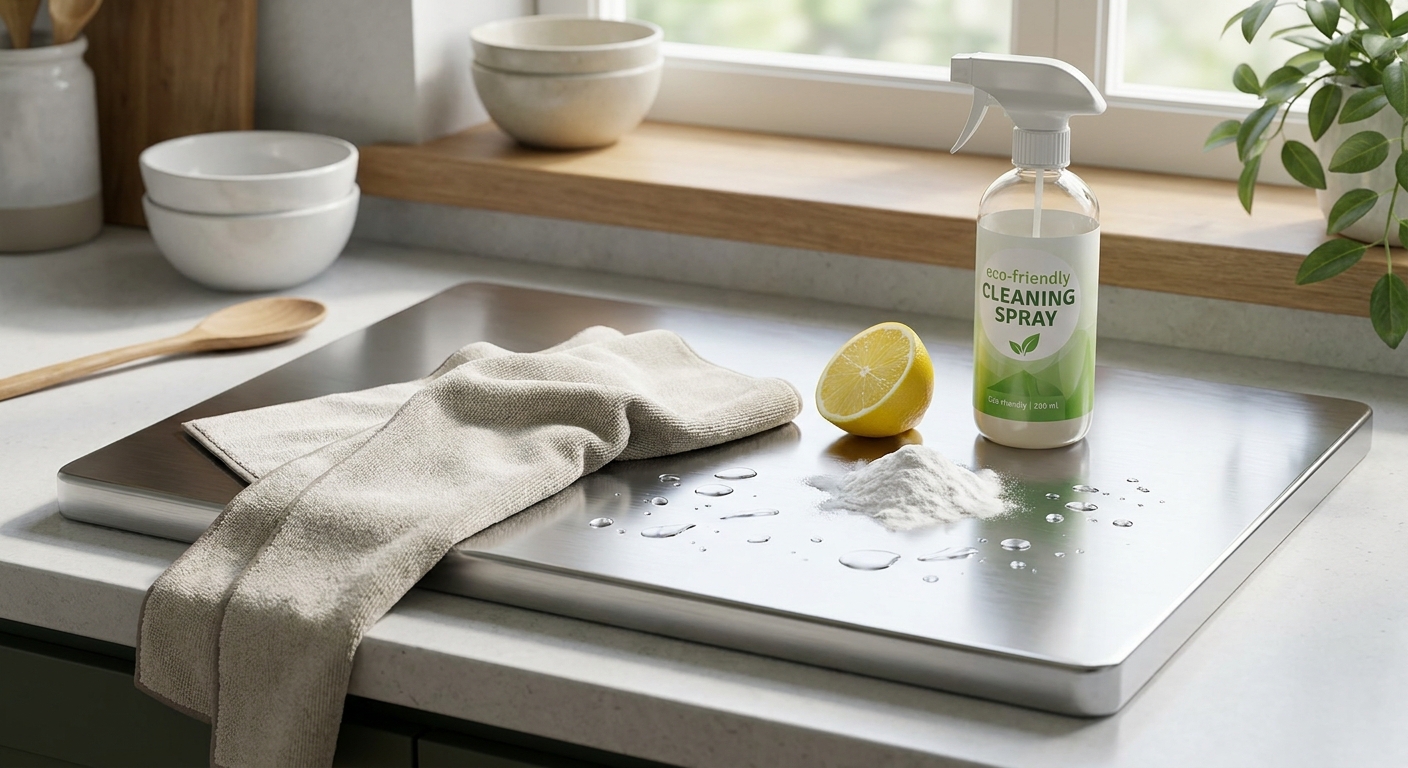
- A stainless steel chopping board (dishwasher-safe models still benefit from hand care)
- Warm water and washing-up liquid
- A soft sponge or non-abrasive scrub pad - never steel wool, it scratches the surface it's meant to protect
- White vinegar, for weekly descaling
- A clean tea towel or a drying rack that lets the board stand upright
- Baking soda, for stubborn stains or odour
The steps
1. Rinse immediately after use
Food left sitting on stainless steel starts to dry and bond to the surface within 20-30 minutes, especially anything with sugar or starch. Rinse the board under warm water the moment you're done chopping, before it goes anywhere near the sink pile.
Common mistake: stacking a used stainless steel chopping board under other dishes. The weight and trapped moisture speed up spotting.
2. Wash with soap and a soft sponge
Washing-up liquid cuts grease that plain water leaves behind, and a soft sponge won't scratch the finish. Work in the direction of the brushed grain if your board has one - it's a cosmetic detail, but it keeps the surface looking even.
Expected outcome: a board that's visibly clean and free of residue, ready to dry rather than sit wet.
3. Descale weekly with a vinegar rinse
Hard water leaves mineral spots on stainless steel that soap alone won't shift. Mix one part white vinegar to three parts water, wipe the board down, then rinse and dry. Do this once a week if your board sees daily use - twice a month is enough for occasional use.
Common mistake: using neat vinegar or leaving it to sit. Straight vinegar left too long can dull the finish rather than protect it.
4. Dry the board standing up, immediately
This is the step people skip and it's the one that causes the most damage. Stainless steel that air-dries flat, especially near iron cookware or on a damp countertop, can develop rust freckling from trace iron particles transferring onto the surface. Towel-dry it fully, then stand it upright on a rack.
5. Lift stains with baking soda before they set
For turmeric, beetroot, or tomato residue that soap won't fully shift, make a paste of baking soda and a little water, rub it in with a soft cloth, then rinse. It's a mild abrasive, not a bleach substitute, so it won't damage the finish the way harsher scouring powders can.
6. Sanitise separately for raw meat and fish
A stainless steel chopping board's real advantage is that it doesn't hold odour or bacteria in a grain the way wood can, but that only matters if you're actually sanitising it. After raw meat, fish, or poultry, wash with soap first, then a diluted bleach solution or food-safe sanitiser, then rinse thoroughly and dry standing up.
7. Check the edges and corners monthly
Spot rust and pitting start at edges and rivets before they show up on the flat surface. Run a hand and eye over the board's edges once a month - catching early spotting with a vinegar wipe is far easier than dealing with set-in rust later.
Troubleshooting
Rust spots appearing on the surface: Usually iron transfer from another pan or utensil, not the steel itself corroding. Scrub with a baking soda paste, rinse, dry standing up, and stop storing it touching cast iron.
Cloudy water spotting that won't wipe off: Hard water minerals baked on by drying in direct heat. A stronger vinegar soak - full strength, five minutes, then rinse - usually clears it.
Board smells even after washing: Bacteria trapped in a scratch or seam, common on boards used for both raw meat and produce without separate boards. Sanitise with diluted bleach, rinse well, and consider a dedicated board for raw meat and fish going forward - see how to pick the right board for raw meat and fish if you're setting up a two-board system.
Knives feel duller after switching from wood to steel: This is expected, not a fault. Stainless steel is harder than any wood surface and takes an edge off blades faster with repeated contact - it's the trade-off for the wipe-clean convenience.
Board slides around on the counter: Steel boards are lighter than solid hardwood and often lack a textured underside. A damp tea towel underneath solves it for most kitchens.
Stainless steel earns its keep on wet, high-acid jobs - mincing garlic and ginger, quartering citrus, breaking down raw fish - where wood would take stains and odour into the grain that no amount of oiling fully lifts. That's the job to hand it, rather than expecting it to replace a dedicated prep board for everything.


Tools and resources
- Warm water, washing-up liquid, and a soft sponge - the everyday routine, no specialist products required
- White vinegar for weekly descaling, baking soda for stain lifting
- A drying rack that lets the board stand rather than sit flat
- If you're weighing steel against a solid hardwood board for daily use, storing a wooden board correctly to stop warping covers the equivalent routine for wood, since the storage rules differ a good deal between the two materials
What to do next
If you decide a hardwood board earns a place alongside your steel one - most kitchens end up running both, steel for wet raw prep and wood for everyday chopping and serving - the maintenance schedule is different in almost every respect. Oiling comes into it, standing storage still matters, and the timing changes with how often the board gets washed. Oiling a chopping board correctly to keep it lasting walks through that schedule in full, including how often mineral oil and board butter need reapplying through 2026 and beyond.
FAQ
Is a stainless steel chopping board better than wood?
Neither wins outright - stainless steel resists odour and bacteria better on raw meat and fish, while a solid hardwood board holds a knife edge longer and doesn't need the same rust-prevention routine. Most kitchens are better served running one of each.
Can you put a stainless steel chopping board in the dishwasher?
Most stainless steel chopping boards are dishwasher-safe, but repeated heat cycles can dull the finish faster than hand washing. Hand wash daily and reserve the dishwasher for deeper cleans.
How do you stop a stainless steel chopping board from rusting?
Dry it standing upright immediately after washing and keep it away from cast iron or other iron cookware, since surface rust on steel is almost always iron transfer rather than the steel corroding on its own.
How much does a stainless steel chopping board cost in 2026?
A basic double-sided stainless steel chopping board runs around 24.99 for a home kitchen size, with premium or oversized commercial models costing more.
Does a stainless steel chopping board dull knives faster than wood?
Yes. Stainless steel is a harder surface than any wood, so it takes an edge off blades quicker with regular use - it's the trade-off for the low-maintenance, wipe-clean surface.
What's the best way to remove stains from a stainless steel chopping board?
A baking soda and water paste rubbed in with a soft cloth lifts turmeric, beetroot, and tomato stains without scratching the surface the way steel wool or scouring powder can.
Can you use vinegar to clean a stainless steel chopping board?
Yes, a 1:3 vinegar-to-water rinse once a week clears hard water spotting. Neat vinegar left sitting for too long can dull the finish, so dilute it and rinse promptly.
Should raw meat and vegetables use the same stainless steel board?
Not ideally. Even on a surface that resists bacteria better than wood, cross-contamination still happens without proper sanitising between uses, so a dedicated board for raw meat and fish is worth setting up.
One last thing
The detail most people miss on a stainless steel chopping board isn't the washing, it's the drying position. A board left flat, even on a rack, holds moisture in the corners and rivets where rust starts. Standing it upright the moment it's dry to the touch is the single habit that separates a board that still looks new after a year of 2026 use from one that's freckled with rust spots by spring.