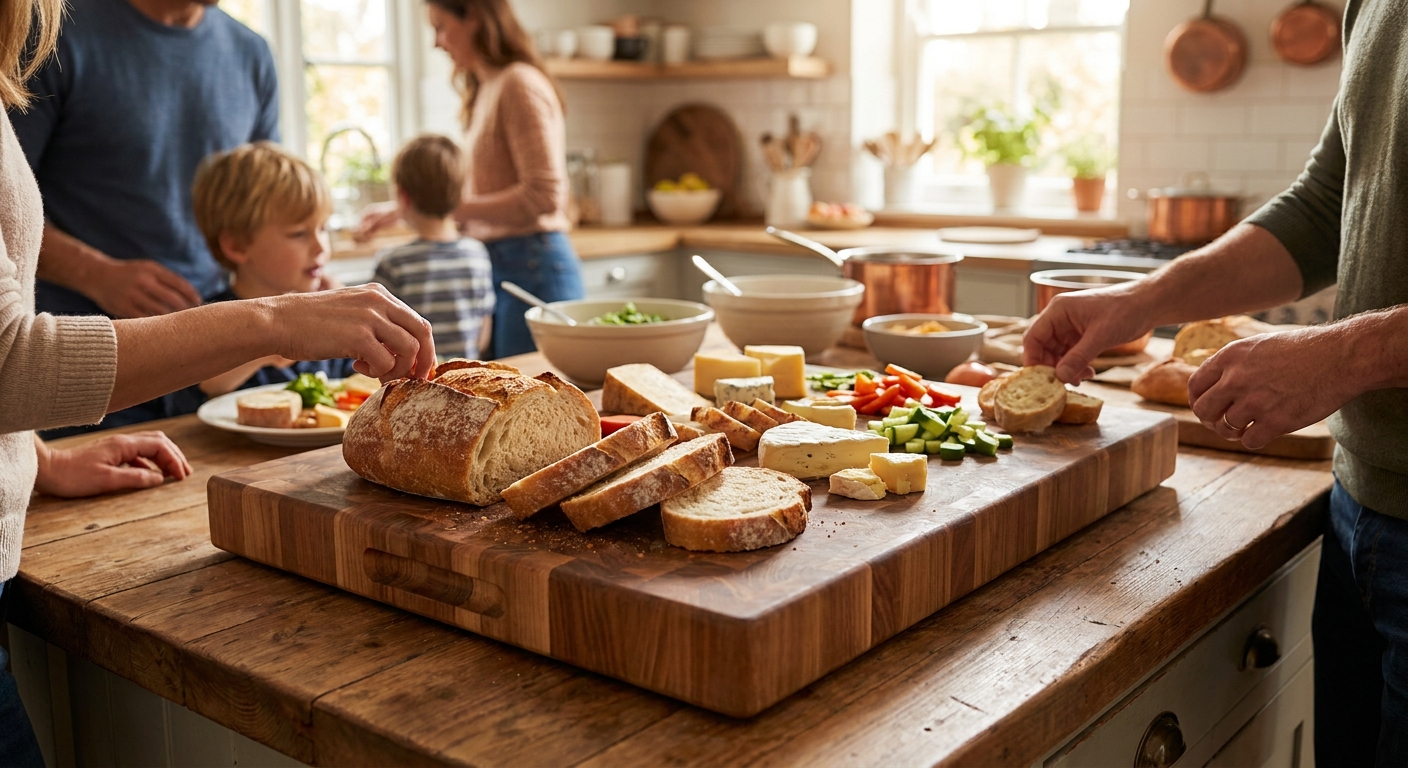
Feeding five, six, or a full table on a Sunday changes what a chopping board needs to do. This guide covers the size, thickness, and wood that hold up to a busy Irish family kitchen in 2026, and which boards earn a permanent spot on the counter instead of a shelf.
- The Moat & Grain Turlough Butcher Block at €170 is the strongest chopping board for large family kitchens cooking most nights. Buy.
- End grain boards over 40mm thick self-heal knife marks better than edge grain under daily family chopping.
- Boards under 35cm wide struggle with family-size meat and veg prep - size up before buying in 2026.
- The Grangestone Beech & Poplar Butcher Block at €145 works well as a second board for veg and bread.
- Skip thin bamboo boards under 20mm for large households - they cup and crack within a year of daily use.
Why this matters
A board built for one or two people gets asked to do a different job once you're chopping for five or more. Undersized boards crowd knife work, thin boards warp under back-to-back roasts, and boards without enough surface area force you to wash and reset mid-prep. The right chopping board for large family cooking cuts prep time and lasts years instead of months - see the full range at Saw Swag. Getting the size and thickness wrong is the most common mistake buyers make in 2026, since plenty of boards marketed as "family size" are barely bigger than a standard cutting board.
Who this is for
This guide is for home cooks in Ireland regularly prepping meals for four or more people - Sunday roasts, batch cooking for a busy week, or hosting extended family for Christmas and birthdays. If you're chopping veg for a stew that feeds six, carving a joint for ten, or running three dishes at once, a standard 30cm board won't keep up. You need surface area, thickness that resists warping, and wood that takes daily knife contact without splitting.
What to look for in a chopping board for large family kitchens
Surface area first, everything else second
A board under 35cm wide leaves no room to separate raw meat from veg while you work, which means more washing and more stopping mid-prep. Look for boards in the 45-60cm range if you're regularly cooking for five or more - that width lets you portion a chicken on one side and chop onions on the other. A guide to choosing the right size chopping board breaks this down by actual pan and platter dimensions, not just counter space.
Thickness that survives daily chopping
Anything under 20mm flexes under a heavy cleaver stroke and starts to cup within a year of daily use. For a family kitchen, 30-40mm is the working minimum, and blocks built past 45mm resist warping even when they sit wet in a sink overnight - something a thinner board won't survive. Thickness is also what lets a board absorb repeated knife scarring without splitting through to the base.
End grain vs edge grain for daily volume
End grain construction lets wood fibres close back over knife marks, so a board used daily for years still looks presentable instead of scarred. Edge grain boards are lighter and cheaper but show wear faster under the volume a large family generates in a single week. If you're prepping most nights in 2026, end grain earns its higher price over the course of the year.
Wood species and durability
Beech, walnut, cherry, and maple all hold up to daily knife contact, but density varies - maple and beech resist deep gouging better than softer species. Mixed-species boards, walnut, cherry, maple, and beech combined, spread that durability across the whole surface instead of relying on one wood to do all the work.
One board is rarely enough
Households feeding five or more usually need at least two boards in rotation - one for raw meat and fish, one for veg, bread, and serving - so prep doesn't stall while a board dries after washing. A guide to separating raw meat and fish prep covers how to split boards by task without overbuying.
Finish and maintenance that match real use
A board finished with food-safe mineral oil and conditioned with board butter resists water absorption and cracking far better than an unfinished or lacquered surface - lacquer chips under a knife, oil doesn't. A board used most nights needs reoiling more often than an occasional-use board, so factor maintenance time into the buying decision, not just the upfront price.
Top picks for a large family kitchen


Moat & Grain Turlough Premium Wooden Butcher Block - the daily workhorse. Walnut, cherry, maple, and beech combined at \u20ac170, built for a family kitchen doing meal prep most nights of the week. The mixed hardwoods spread wear so no single soft patch develops faster than the rest. Verdict: Buy.
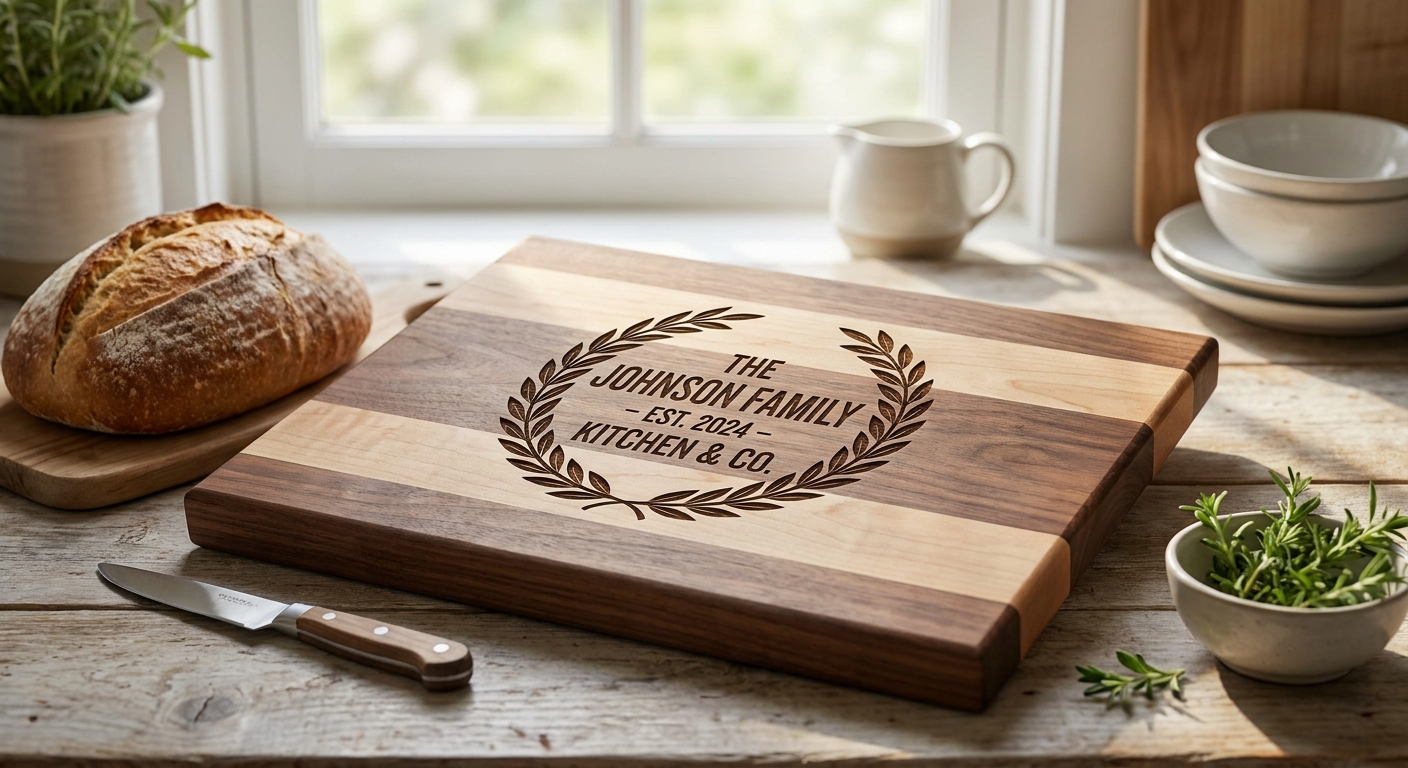
Moat & Grain Barrowstone Large Beech & Walnut Butcher Block - the piece that also works as a gift. Beech and walnut construction at \u20ac145, handcrafted in Co. Kildare, sturdy enough for daily chopping and presentable enough to bring out for a wedding or anniversary table. Verdict: Buy.
Moat & Grain The Grangestone Large Beech & Poplar Butcher Block - the second board. \u20ac145 buys full-size surface area for veg, bread, and serving, keeping raw meat prep on a separate board without paying twice for two premium pieces. Verdict: Consider.
Large Red Oak End Grain Butcher Block - the heavy-use pick. End grain red oak at \u20ac110 self-heals knife marks under repeated cleaver work, making it the best value option for families chopping meat most nights. Verdict: Buy for nightly meat prep, Consider for lighter, veg-only routines.
What to avoid
- Thin bamboo boards under 20mm - they look fine in a shop but cup and crack within a year of daily family-size chopping.
- A single small board doing every job - prepping meat, veg, and bread on one 30cm edge grain board slows cooking for five or more and raises cross-contact risk.
- Unfinished or varnish-sealed boards - varnish chips under knife contact and isn't food-safe once it cracks; mineral oil and board butter protect the wood without that risk.
Verdict at a glance
| Board | Wood | Thickness feel | Price | Best for | Verdict |
|---|---|---|---|---|---|
| Moat & Grain Turlough | Walnut, cherry, maple, beech | Heavy, daily-use | \u20ac170 | Nightly family cooking | Buy |
| Moat & Grain Barrowstone | Beech, walnut | Heavy | \u20ac145 | Everyday use plus gifting | Buy |
| Moat & Grain Grangestone | Beech, poplar | Substantial | \u20ac145 | Second board for veg and bread | Consider |
| Large Red Oak End Grain | Red oak, end grain | Heavy, self-healing | \u20ac110 | Heavy meat prep | Buy |
FAQ
What's the best chopping board for a large family kitchen in 2026?
A butcher block of 40mm or more, like the Moat & Grain Turlough at €170, holds up best to daily prep for five or more people in 2026. Multi-wood construction spreads wear so one soft patch doesn't develop faster than the rest.
How big should a chopping board be for a family of five or more?
Aim for a board at least 45-50cm wide so you can portion meat and chop vegetables without switching boards mid-meal. Anything under 35cm forces constant washing and resetting during a single prep session.
Is end grain or edge grain better for daily family use?
End grain works better for households chopping most nights, because the wood fibres close back over knife marks instead of scarring permanently. Edge grain boards cost less but show wear faster under heavy weekly volume.
How thick should a family chopping board be?
30-40mm is the working minimum for daily use, and boards over 45mm resist warping even after sitting wet overnight. Boards under 20mm flex under a cleaver and start cupping within a year.
Do I need more than one chopping board for a large family?
Most households feeding five or more need at least two boards in rotation, one for raw meat and fish and one for veg and bread. That split keeps prep moving while one board dries after washing.
How do you keep a wooden chopping board from warping with daily use?
Oil it regularly with food-safe mineral oil and condition it with board butter so the wood doesn't absorb and release water unevenly. Boards used daily need reoiling more often than an occasional-use board.
How much does a good family-size chopping board cost in 2026?
Solid hardwood family-size butcher blocks run from roughly €110 to €170 in 2026, depending on wood species and thickness. Thinner or single-species boards cost less but don't last as long under daily heavy use.
Can one board handle both raw meat and vegetables for a large family?
Technically yes, but it raises cross-contact risk and slows prep when you're cooking for five or more. A second board dedicated to veg, bread, and serving is worth the extra cost for daily family cooking.
One last thing
Most families upsize the wrong dimension - they buy a wider board but keep the same 18-20mm thickness, and the board still warps within a year. Thickness, not width, decides whether a chopping board for large family use survives daily contact with hot pans, wet sinks, and heavy knife work through 2026 and beyond.