Picking the right chopping board size means matching board dimensions to your counter space, household size, and how you actually cook, not just grabbing the biggest one in the shop.
- A chopping board size guide starts with your counter and sink, not the board on the shelf.
- A 30-40cm board suits daily chopping for one to two cooks; go 45cm-plus for batch cooking or hosting.
- The Moat & Grain Turlough Premium Butcher Block works as an everyday board for a busy Irish kitchen. Buy.
- Undersized boards push food off the edge; oversized ones jam drawers and won't fit the sink for washing.
- Thickness matters as much as length - anything under 2cm warps faster under daily use.
Why this matters
Most people buying a chopping board size guide search because they've already bought the wrong board once. Too small and vegetables roll onto the counter mid-chop. Too big and it won't fit the sink, the drying rack, or the drawer it's meant to live in.
A solid hardwood board is a piece of kitchen equipment you'll use several times a week for years, so the size decision isn't cosmetic. Get it wrong and an otherwise well-made board sits unused at the back of a cupboard - which defeats the entire point of buying something built to last into 2026 and beyond.
At Saw Swag the boards range from compact everyday chopping boards to extra-long grazing platters, because a board sized for solo weeknight cooking is a different object to one sized for a table of eight at Christmas.
What you'll need
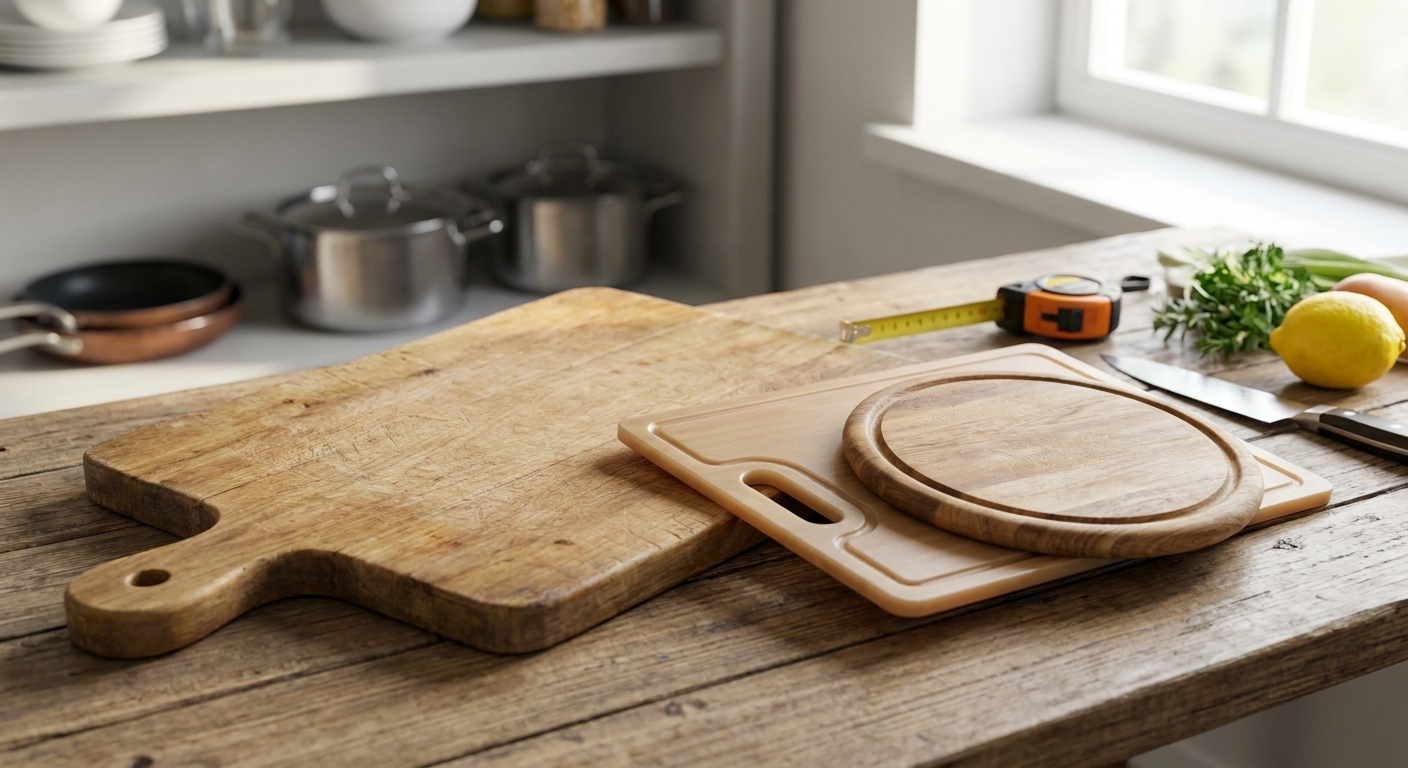
- A tape measure (for your counter, sink, and any drawer or shelf you plan to store the board on)
- A sense of your typical cooking session - solo meals, family dinners, or entertaining for a group
- Knowledge of your sink's internal dimensions, since washing a board that doesn't fit is a daily annoyance
- An idea of primary use: everyday chopping, serving, or charcuterie and grazing
- 10 minutes, before you buy rather than after
The steps
1. Measure your counter's clear workspace
Clear the counter where you'll actually chop and measure the open rectangle, not the whole worktop. Most Irish kitchen counters give you 45-60cm of genuinely free workspace once the hob, sink, and small appliances are accounted for.
A board that eats the entire clear space leaves nowhere to put chopped ingredients, bowls, or a colander. Leave at least 15cm of counter clearance on at least one side of the board.
Common mistake: measuring the full counter length instead of the actual clear zone you cook in.
2. Match board size to household size
A board for one or two people rarely needs to exceed 35-40cm on its longest edge. A board feeding four or more regularly benefits from 45cm or longer, simply because you're cutting more volume in one session - a full chicken, a tray of vegetables, a loaf of bread.
The Moat & Grain Turlough Premium Butcher Block, built from walnut, cherry, maple and beech, sits in that mid-to-large range and handles daily prep for a busy household without dominating a small counter.
Expected outcome: you should be able to name a household size before you shop, not guess at it in the shop.
3. Separate chopping boards from serving boards
A board built for daily chopping and a board built for serving charcuterie or a grazing spread are different sizes for different reasons. Chopping boards need enough surface for a knife and ingredients with room to spare; serving boards need enough surface for a spread of cheese, meats, and crackers laid out for guests.
The Extra-Long American Walnut Grazing Board is built for the second job - a table centrepiece, not a daily prep surface. Trying to use a grazing board as your only everyday chopping board usually means it's too large and too precious-feeling for weeknight onion chopping.
Common mistake: buying one oversized board and expecting it to do both jobs well.
4. Check thickness alongside length and width
Size isn't only length and width - thickness changes how a board performs and how long it lasts. Boards under 2cm thick flex more under heavy chopping and are more prone to warping over time; boards from 3cm upward sit flatter, resist warping, and take heavier use.
A thicker board also weighs more, which matters if you're moving it between counter and sink daily rather than leaving it in one spot as a serving piece.
Expected outcome: for daily chopping, prioritise a board that's substantial in thickness even if that means a slightly smaller footprint.
5. Confirm the board fits your sink and drying space
Measure your sink's internal width before buying anything over 40cm. A board that has to be washed at an angle, propped against the tap, or split across two sink washes is a board you'll resent using.
If your sink is narrow, size down on the chopping board and reserve a longer board like the Turlough Premium Butcher Block for prep tasks you can wipe down rather than fully submerge.
Common mistake: buying a large board without checking whether it physically fits the sink you'll wash it in.
6. Plan storage before you buy, not after
Decide whether the board will live flat on the counter, upright in a slot, or in a drawer, and measure that space too. A board stored on its edge needs a slot at least as deep as the board's width plus a couple of centimetres of clearance so air can reach both faces.
Boards stored flat and stacked need airflow between uses - solid hardwood that sits damp against another surface is the fastest route to warping, regardless of size.


7. Size for the occasion, not just the kitchen
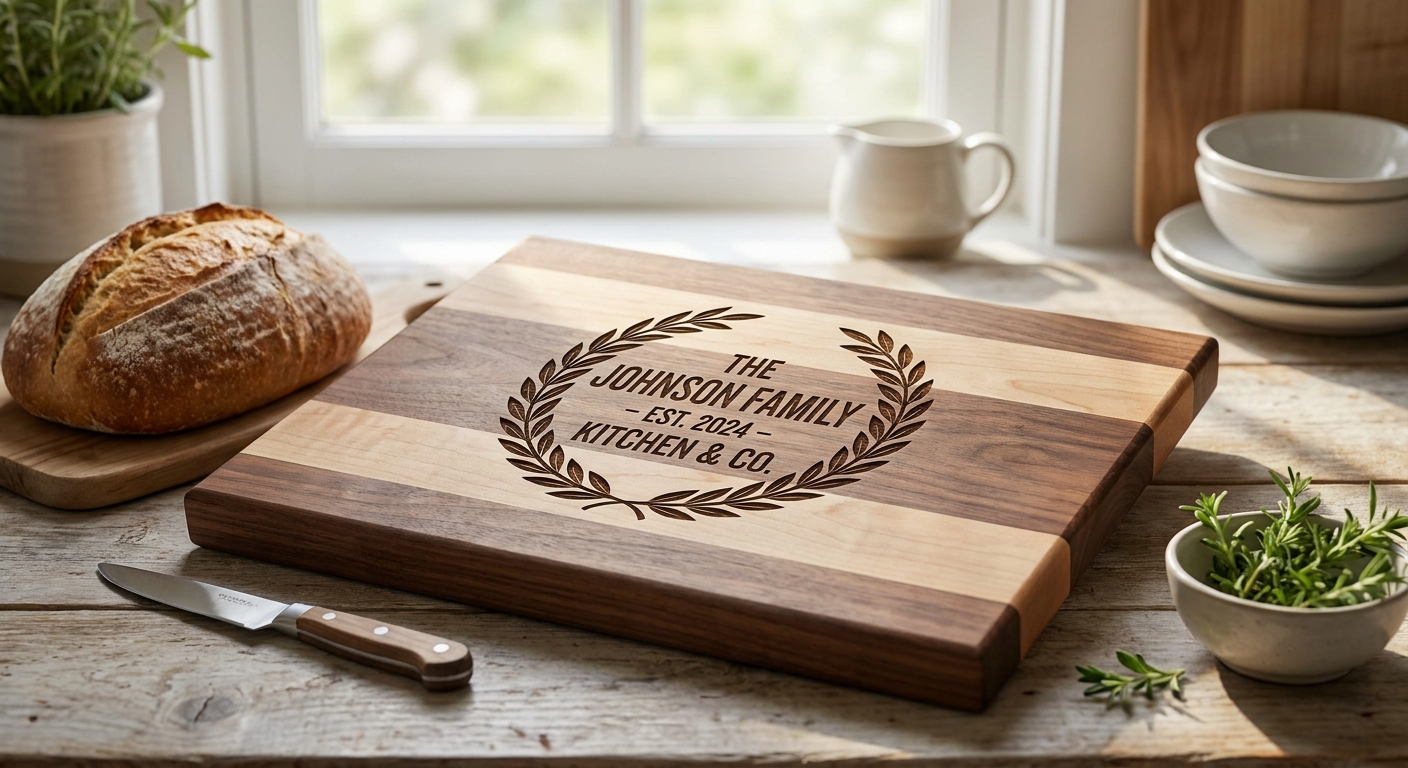
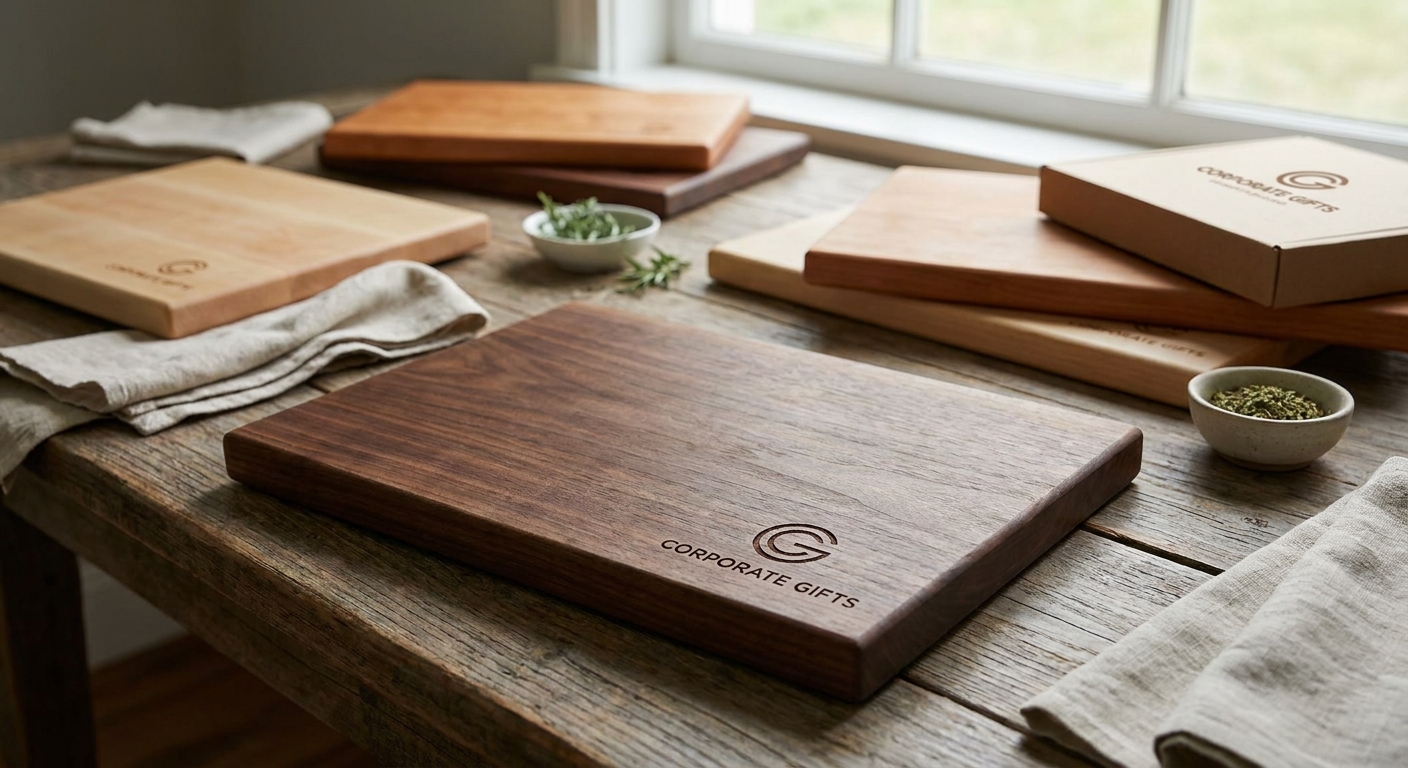
A board bought as a wedding or anniversary gift often needs to look right on a table as well as perform in a kitchen, which usually points toward a mid-to-large serving board rather than the smallest everyday option. A wedding gift should earn its place in the kitchen, not the back of a cupboard - which means sizing it for the meals a couple will actually share for years, not just the unboxing photo.
Expected outcome: for gifting, size up slightly from what you'd buy for yourself, since shared households cook in larger volumes.
Troubleshooting
- Food keeps sliding off the edges mid-chop - your board is too small for the ingredient volume; move up a size class rather than chopping in smaller batches indefinitely.
- The board won't fit in the sink - measure the sink's internal width and size down, or plan to wipe rather than submerge larger boards.
- The board has started to warp or cup - this is usually a storage problem, not a size problem; store flat with airflow or upright with clearance on both faces.
- The board dominates a small counter - you likely bought for entertaining when you needed an everyday board; keep the large piece for occasions and add a smaller board for daily use.
- Two people keep bumping elbows at one board - one large board isn't always the answer; a second, smaller board for a helper can solve this faster than sizing up further.
- The board feels too light and shifts while chopping - thickness, not just footprint, affects stability; a thicker board sits more securely under knife pressure.
Tools and resources
- Tape measure, for counter, sink, and storage dimensions
- A note of your household size and typical batch size for cooking
- Food-safe mineral oil and board butter, to maintain whichever size board you choose
- A read of the guide on oiling a wooden chopping board so the board you size correctly also lasts correctly
What to do next
Once you've settled on a size, the next job is keeping the board in the condition it arrived in. Solid hardwood boards need regular oiling regardless of dimensions - a small board neglected warps just as fast as a large one. Work oiling into your kitchen routine from week one in 2026, not after the first crack appears.
FAQ
What size chopping board do I need for everyday use?
Most one or two-person households do well with a board 30-40cm on its longest edge. Larger households or regular batch cooking justify 45cm or more.
Is a bigger chopping board always better?
No. A board larger than your clear counter space or your sink becomes harder to use and wash daily, even though it looks impressive in the shop.
What's the difference between a chopping board and a serving board size?
Chopping boards are sized for prep work with knife clearance; serving boards, like an extra-long grazing board, are sized for laying out food for a group and rarely double well as a daily prep surface.
How thick should a wooden chopping board be?
Aim for at least 2cm, with 3cm or more preferred for daily heavy use. Thinner boards flex more under a knife and warp faster over time.
What size chopping board is best for a wedding gift?
A mid-to-large solid hardwood board, sized for shared cooking rather than solo use, works best as a wedding or anniversary gift meant to last for years.
Will a large chopping board fit my sink?
Measure your sink's internal width before buying anything over 40cm long. A board that has to be washed at an angle across two sessions becomes a daily inconvenience.
How do I store a large wooden chopping board?
Store it flat with airflow underneath, or upright in a slot with a couple of centimetres of clearance on both faces, so the wood doesn't warp against a damp surface.
Do I need more than one size of chopping board?
Most kitchens benefit from at least two: a smaller board for daily chopping and a larger board for serving or hosting, since one size rarely covers both jobs well.
One last thing
The most common sizing mistake isn't buying too small - it's buying one board to do every job, from weeknight onions to a wedding charcuterie spread. A dedicated chopping board sized for daily prep, paired with a longer serving board for hosting, outlasts a single oversized board trying to do both, because neither piece gets pushed past what its size was built for.